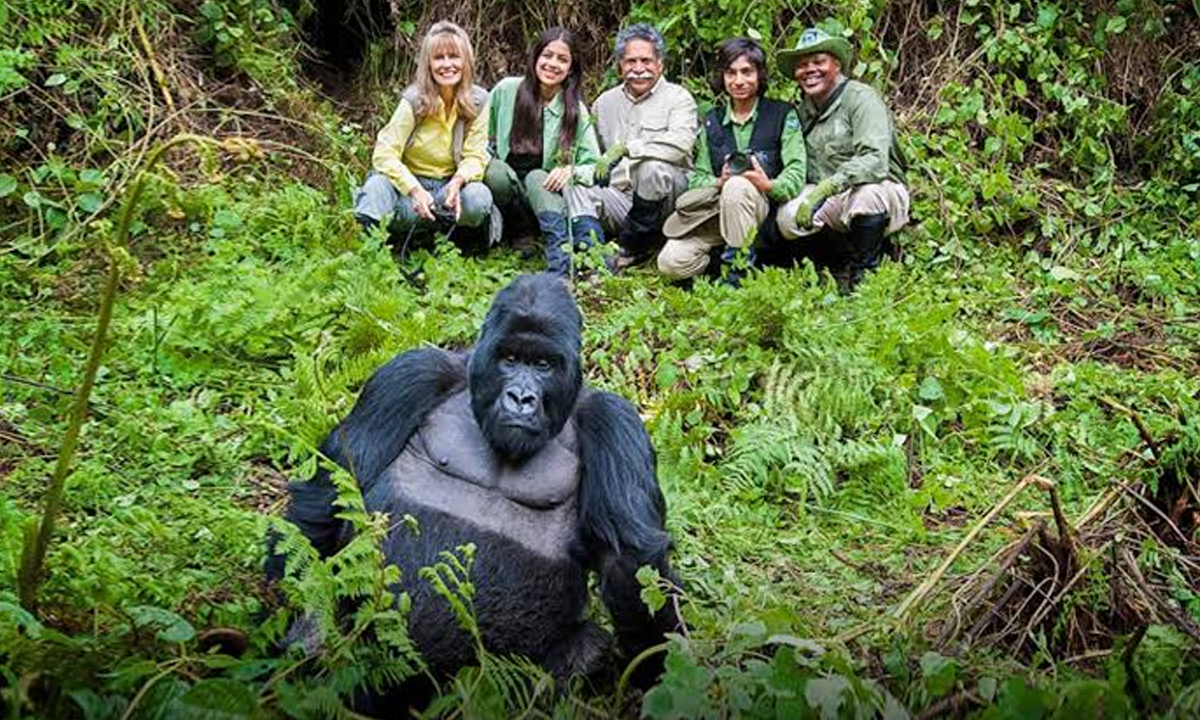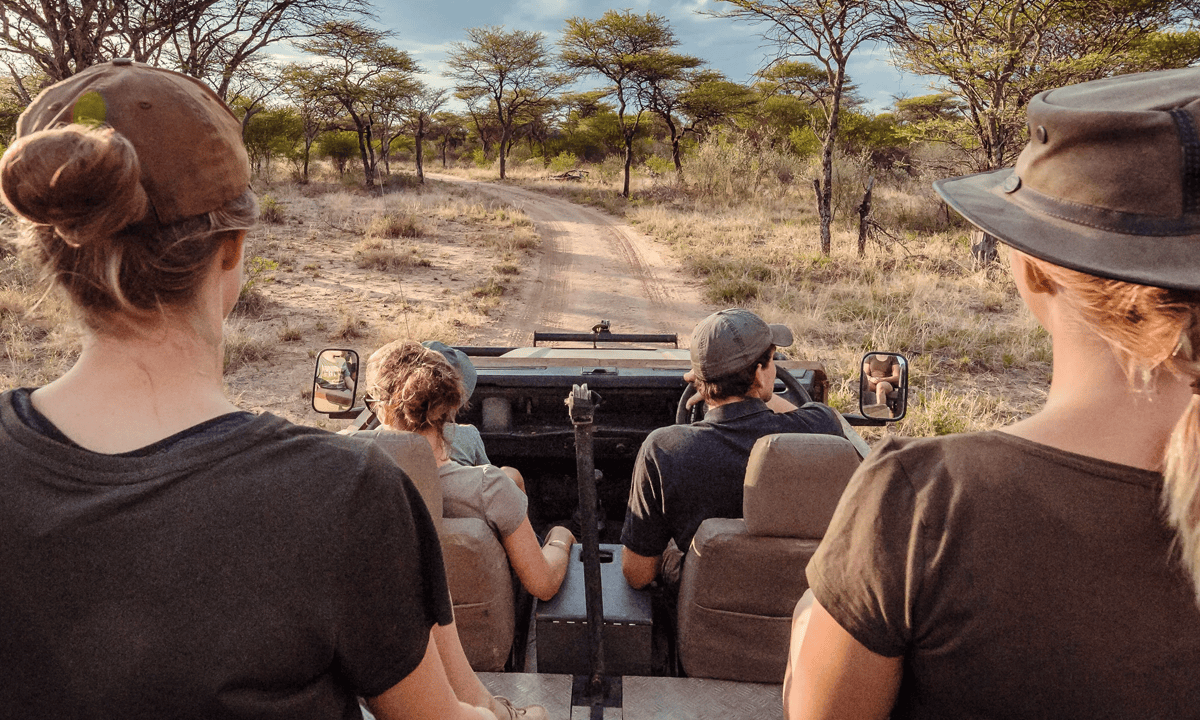
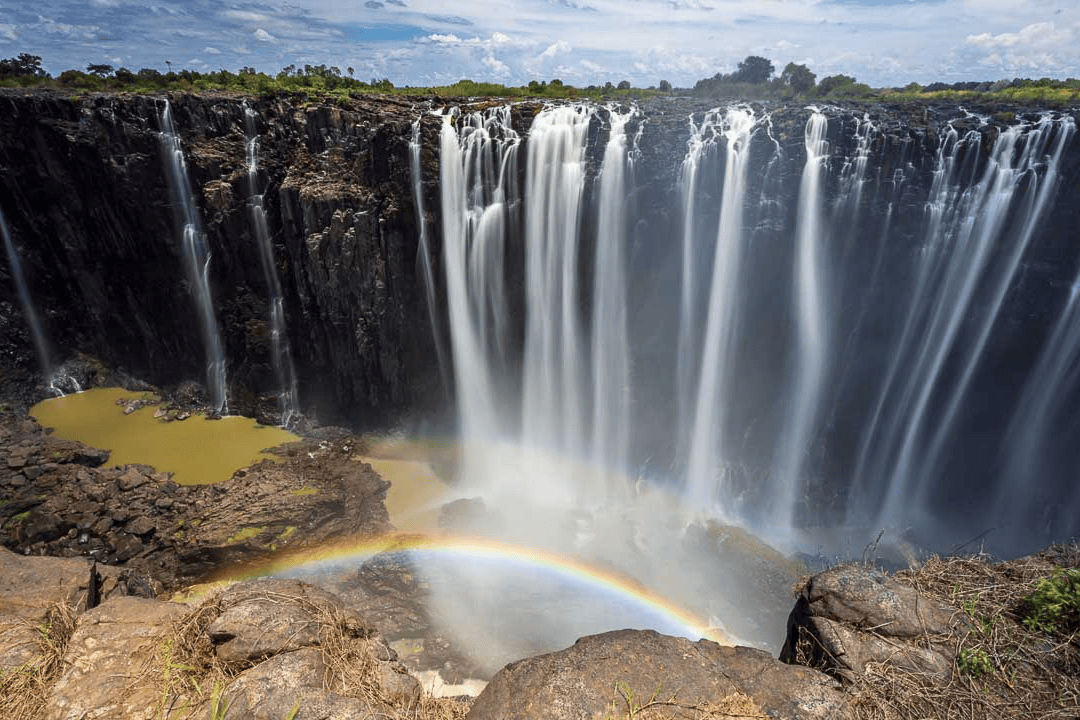
Most travelers budget one day for Victoria Falls, see the falls, and leave wondering why everyone said to stay longer. The falls themselves take about two hours. Everything built around them, the river cruises, the helicopter flights, the rafting, the wildlife day trips into Botswana, is what fills three or four days, and it’s the reason the town has become a full destination rather than a photo stop.
This guide covers the things to do in Victoria Falls, sorted by type, with honest notes on seasons, which side of the border each one favors, and how many days to give the place.
Start with the falls themselves
See the falls properly on the first morning, not as an afterthought. Mosi-oa-Tunya, the smoke that thunders, spans nearly two kilometers and drops a hundred meters into a gorge, and the viewing experience depends heavily on the month.
From roughly February to June, high water sends up a wall of spray that soaks the viewing paths and sometimes hides the falls entirely behind mist; the power is overwhelming, and rainbows are everywhere, but the full curtain can be hard to see. From July to December, falling water clears the view, revealing the full width of the gorge, and by September and October the Zambian side can run nearly dry in stretches while the Zimbabwean side keeps flowing. Rent a poncho in high water, bring a dry bag for your camera, and walk the full path to Danger Point on the Zimbabwean side or across the Knife-Edge Bridge on the Zambian side.
Both sides are worth seeing and are an easy border crossing apart. Zimbabwe holds about three-quarters of the viewpoints and the panoramic, full-curtain perspective; Zambia offers the close-up, inside-the-gorge drama and, in low water, access to the lip of the falls. Our Zimbabwe and Zambia destination pages cover the practicalities of each.
The Zambezi sunset cruise
If there is one activity every visitor should book, it’s a Zambezi sunset cruise. Boats depart from both banks in the late afternoon and drift along the wide, calm river above the falls as the sun drops. It’s a wildlife experience as much as a scenic one: hippos surface beside the boat, elephants come down to drink on the islands, crocodiles line the sandbanks, and the birding is excellent. Options range from large party boats to small, quiet luxury vessels with proper dinners; the smaller boats are worth the premium for the wildlife. Two hours, no fitness required, and the right first evening for any stay.
Victoria Falls helicopter flight
The “Flight of Angels” is the one splurge that nearly everyone agrees is justified. A 12- to 15-minute helicopter flight circles the falls several times, showing the full curtain, the zigzag of the gorges downstream, and the river islands above, a perspective impossible from the ground. Longer flights of 25 to 30 minutes add the Zambezi National Park and its elephant herds. The flight is exceptional in every season; in high water, it’s the only reliable way to see the whole falls through the spray. Book for early morning or late afternoon light, and expect it to be the most photographed quarter-hour of your trip. Microlight flights from the Zambian side are the open-air alternative for the brave.
White water rafting on the Zambezi
Below the falls, the Zambezi funnels through the Batoka Gorge in a sequence of rapids ranked among the best commercial white water rafting on the planet, with grade five rapids named Oblivion and The Devil’s Toilet Bowl. It’s a full day, physically demanding, and genuinely intense: expect to flip. The season is the key detail. Low water, roughly August to December, is the prime rafting window, when the biggest rapids run; high water from around February to July shortens the run and closes the upper rapids entirely, with the river sometimes closed to rafting at the peak. Minimum age is typically 15. If adrenaline is the point of your visit, time the trip for the low-water months.
The gorge adrenaline menu
The Batoka Gorge has become an adventure park in its own right. The bungee jump from the Victoria Falls Bridge is the famous one, 111 meters above the Zambezi, launched from the no-man’s-land between the two countries. The gorge swing, zip line, and flying fox offer varying degrees of terror for those who find bungee a step too far, and canopy tours thread the forest at the gorge’s edge. All run year-round. None require experience; all require a signature on a waiver.
Devil’s Pool and Livingstone Island
In low water, typically mid-August to early January, a guided trip from the Zambian side takes small groups by boat to Livingstone Island, on the lip of the falls, and into Devil’s Pool, a natural rock pool where the current lets you lie at the very edge of the drop with the gorge below. It’s one of the most photographed experiences in Africa and entirely dependent on water level; the pool closes when the river rises, and Angel’s Pool nearby sometimes extends the season. Book well ahead; slots are limited.
Wildlife beyond the river
Victoria Falls sits between serious safari country on every side. Within easy reach of town:
- Zambezi National Park (Zimbabwe), minutes from town along the river, for elephant, buffalo, and a chance of lion on a half-day game drive.
- Mosi-oa-Tunya National Park (Zambia), a small park notable for its white rhino, viewable on guided walks.
- Elephant encounters and walking safaris along the river, best booked through operators with ethical standards.
- Hwange National Park, Zimbabwe’s largest reserve and one of Africa’s great elephant parks, two to three hours south: a two- or three-night extension that turns a falls visit into a proper safari.
The Chobe day trip from Victoria Falls
The question everyone asks: can you do Chobe in a day? Yes, and it’s the best day trip in the region. Botswana’s Chobe National Park lies just over an hour by road from Victoria Falls, across the Kazungula border. The standard full-day trip includes a morning boat cruise on the Chobe River, where elephant herds in the hundreds come to the water in the dry season alongside hippos, crocodiles, and buffalo, followed by lunch and an afternoon game drive in the park, then the return to the falls by evening. Dry season (July to October) is extraordinary for elephant numbers.
The honest caveat: a day trip gives you a taste of Chobe, not Chobe itself. Border formalities eat time, and the park rewards an overnight. If Botswana is on your wish list, two or three nights at Chobe, or a longer Okavango extension, is the better move; our Botswana safari guide covers both. If Botswana isn’t otherwise in the plan, the day trip is well worth the early start.
Culture, food, and the quieter options
Not every day needs a harness. The Victoria Falls Bridge historical tour walks the 1905 bridge with a guide in period costume; the Lookout Café perches on the gorge edge for lunch with a view of the bungee jumpers; the Boma dinner is a tourist institution of drumming, dancing, and game meat that’s more fun than it sounds; and the craft markets on both sides of the border are good for serious wood and stone carving. A steam train dinner on the bridge at sunset and the Lookout’s high tea round out the gentler menu.
Victoria Falls with families
The falls work well for families, with activities naturally sorted by age: the sunset cruise, helicopter flight, falls walks, Chobe day trip, bridge tour, and the Boma dinner suit all ages, while rafting, bungee, and Devil’s Pool have age minimums in the mid-teens. Malaria is present year-round, so prophylaxis and bite prevention apply to children; the practical health picture is covered in our health and safety guide, and it’s worth a read before booking river activities with kids.
Frequently asked questions
What is the best activity at Victoria Falls?
For most visitors, the helicopter flight is the best: it’s the only way to see the entire falls at once, it works in every season, and it reframes everything else you do. The Zambezi sunset cruise is the close second and the best value, and rafting is the standout for adventure travelers in low-water months.
Can I do Chobe as a day trip?
Yes. Chobe is just over an hour from Victoria Falls, and a full-day trip with a river cruise and game drive is the region’s best day excursion, especially in the dry season for elephants. It’s a taste rather than the full experience; an overnight or longer is better if Botswana matters to you.
Is Victoria Falls good for families?
Yes, with a natural split: cruises, flights, falls walks, Chobe, and cultural activities suit every age, while rafting, bungee, and Devil’s Pool require mid-teens. Plan for malaria precautions and be selective about river activities with young children.
How many days should I stay?
Three nights is the sweet spot: one day for the falls and a cruise, one for the helicopter and adventure or cultural activities, one for the Chobe day trip. Two nights cover the essentials; four or more lets you add Hwange or an overnight in Botswana, making the falls a safari base rather than a stopover.
Give the falls their days
The falls take a morning; the destination takes three days. Cruise the river, fly over the gorge, cross into Chobe, and let the adventure menu fill the gaps, and Victoria Falls becomes the highlight of a Southern African trip rather than a box ticked on the way through.
See our Victoria Falls destination page for how it fits into the wider region, or reach out with your dates and we’ll tell you which season favors which activities and which side of the border to base on.