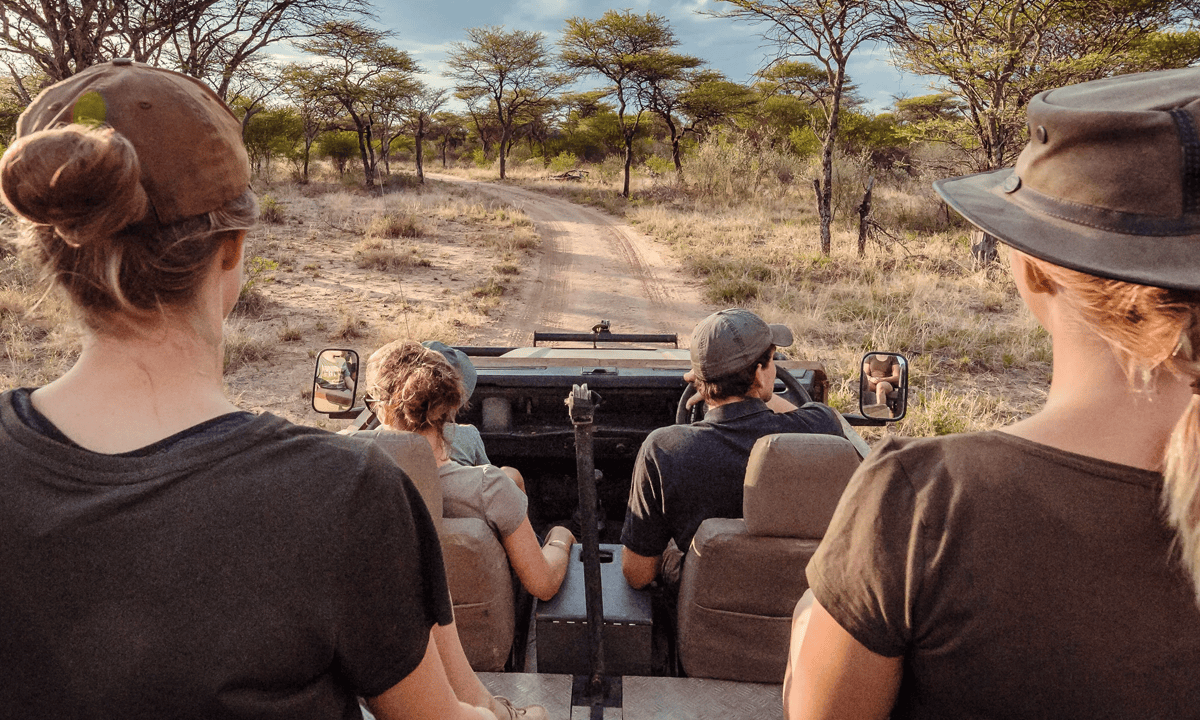
If East Africa is where you go for the Great Migration spectacle, Botswana is where you go for everything else, the quiet, the exclusivity, the wild edge of Africa that most travelers never see. Fewer vehicles, smaller camps, and a model of tourism deliberately built around low volume and high quality.
This guide covers what to expect on a Botswana safari: the major regions, when to go, what it costs, and why the country has quietly become the bucket-list destination for safari travelers who’ve already done Kenya and Tanzania.
Why Botswana
Botswana made an early, deliberate decision: keep safari volume low, prices high, and the wilderness intact. The result is a country roughly the size of France, with fewer than 2.5 million people and some of the most protected wildlife habitat on the continent.
What that means for you as a traveler:
- Small camps. Most properties host 12 to 24 guests. Some flagship lodges cap at 8.
- Exclusive concessions. Private concessions surround the national parks, giving guests rights that public parks don’t allow — off-road driving, night drives, walking safaris, and almost no other vehicles at sightings.
- Diversity of terrain. Water-based safaris in the Delta, classic 4×4 game drives in Moremi, river safaris in Chobe, salt pans in Makgadikgadi, and the Kalahari Desert in the south. No other country offers this range.
- Strong conservation outcomes. Botswana holds Africa’s largest remaining elephant population — over 130,000 — and serves as a stronghold for African wild dog, one of the continent’s most endangered predators.
The catch: it’s not cheap. Quality Botswana camps start around $700 per person per night in the shoulder season and climb to over $2,500 in peak season. But it’s pricing that reflects what you actually get — uncrowded sightings, top-tier guiding, and a wilderness experience that hasn’t been compromised by mass tourism.
The Okavango Delta
The Okavango Delta is the heart of any Botswana itinerary. The Okavango River, which originates in the Angolan highlands, never reaches the sea — instead, it floods into a vast inland delta in northwestern Botswana, creating a 5,800-square-mile maze of channels, islands, lagoons, and floodplains.
The result is a place where you safari from a canoe as often as from a vehicle.
Mokoro canoes
A mokoro is a traditional dugout canoe (now fiberglass for sustainability), poled silently through the reed channels by a local guide standing in the stern. It’s the signature Delta experience. You glide past elephants drinking from the bank, watch sitatunga antelope wade through papyrus, and stop on small islands for short walking safaris. There’s no engine noise — just the dip of the pole and the splash of frogs.
Water-based game drives
When the floodwaters peak (typically June through September), much of the Delta is only accessible by boat. Camps run motorboat game drives through the deeper channels, accessing islands where lion, leopard, and wild dog hunt the resident herds. The contrast of water and big game is what makes the Delta unique on the continent.
Land-based game drives
The Delta also has plenty of dry ground — particularly Chief’s Island in the heart of Moremi Game Reserve, where the soil is high enough to stay above the floodwaters year-round. This is where you find the highest concentration of big cats in the Delta.
The combination of water and land activities is what makes a Delta camp worth the price. You’re not picking between modes — you’re getting all of them.
For more context on the region’s geography and ecosystem, see our dedicated Okavango Delta destination page.
Chobe National Park
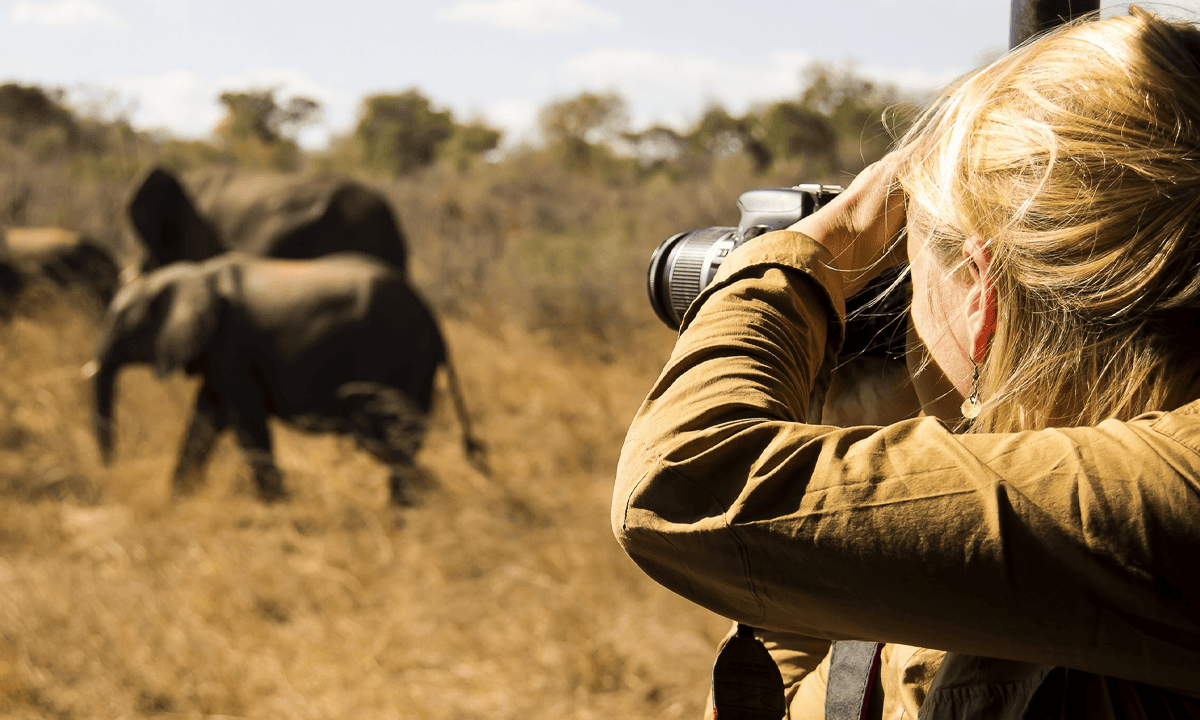
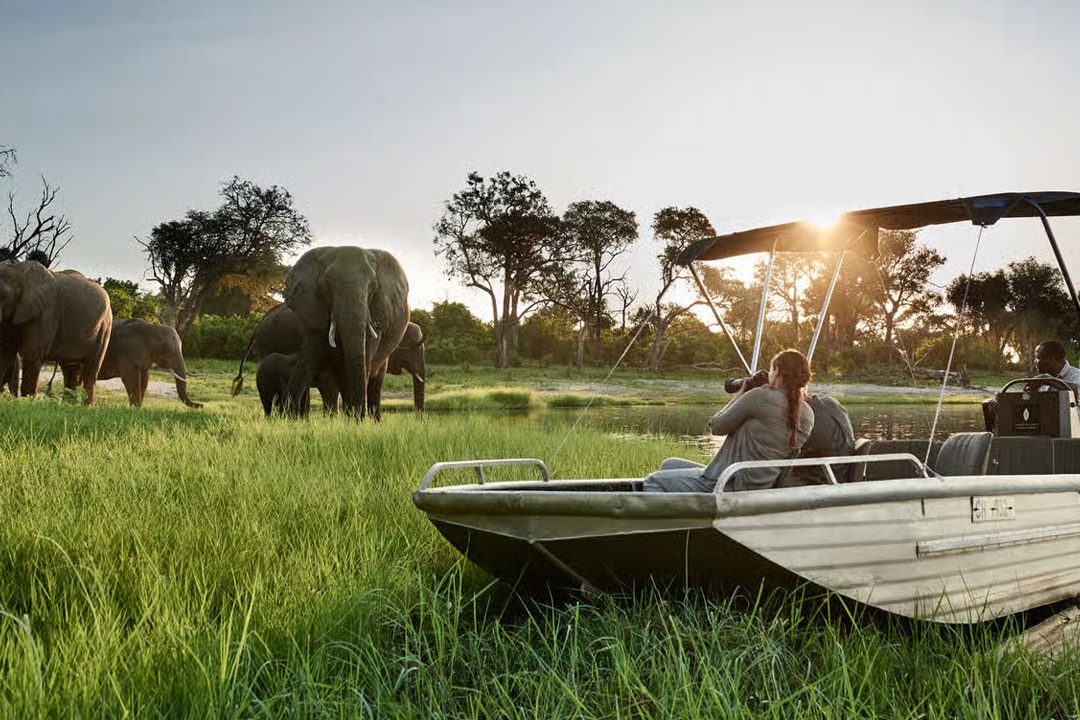
If the Delta is famous for water, Chobe is famous for elephants. The park’s northern boundary follows the Chobe River for about 50 miles, and during the dry season (July to October), tens of thousands of elephants converge on the river to drink, bathe, and cross to the islands.
A late-afternoon boat cruise on the Chobe River is one of the most reliable elephant-viewing experiences in Africa. You’ll routinely see herds of 50 to 100 animals in the water, with hippos surfacing nearby and crocodiles patrolling the shallows.
Chobe also delivers strong sightings of:
- Buffalo herds numbering in the hundreds, sometimes more
- Lion prides that have learned to hunt buffalo and elephant
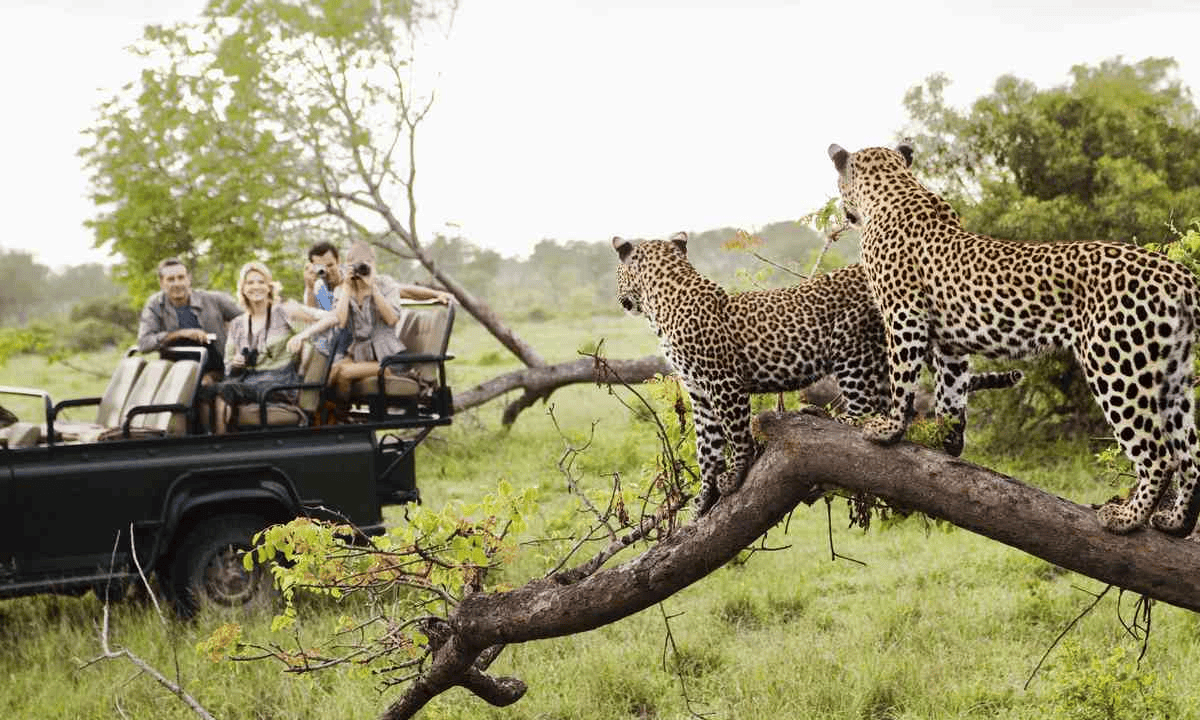
- Leopard along the riverine forest
- Sable and roan antelope in the park’s interior
- Hippos in extraordinary numbers — the Chobe stretch is one of the densest concentrations on the continent
Chobe is also Botswana’s most accessible park. The gateway town of Kasane sits on the Zambezi-Chobe-Zambia-Zimbabwe four-way border, just over an hour from Victoria Falls. Most travelers combine two to three nights at Chobe with a Falls visit and onward flights into the Delta.
Moremi Game Reserve
Moremi sits inside the eastern Okavango Delta and is the only formally protected portion of it. Roughly 1,200 square miles of mixed habitat — floodplains, mopane woodland, lagoons, and grasslands — make it one of the most biodiverse reserves in Africa.
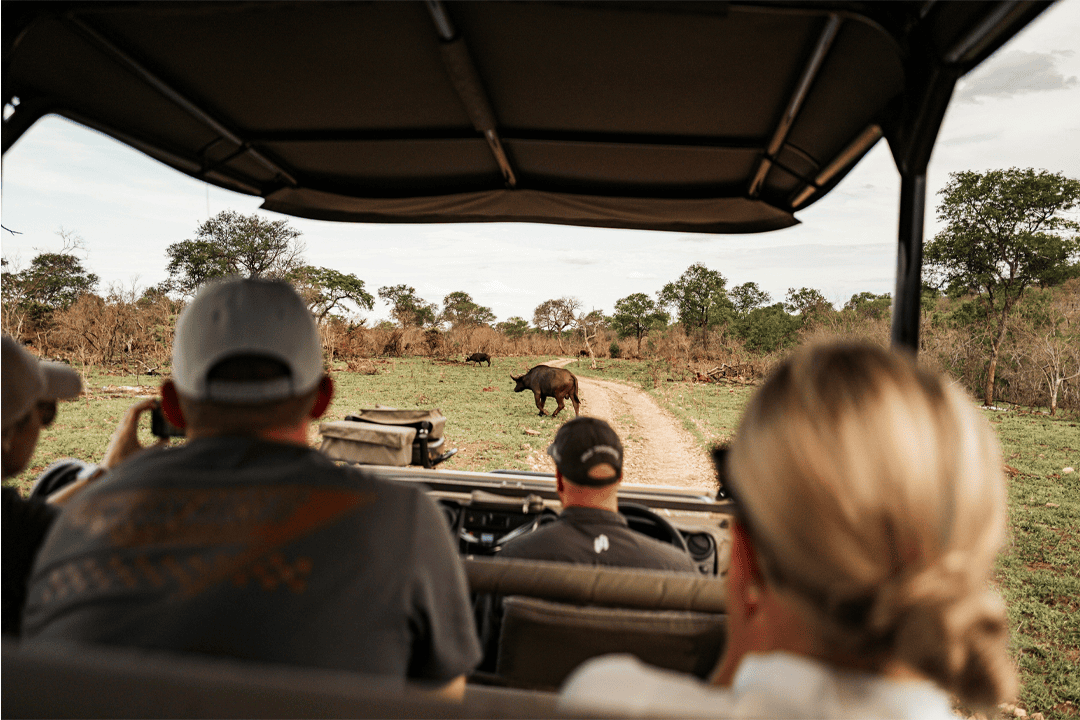
Moremi is where Botswana’s Big Five reputation lives. Lion, leopard, elephant, and buffalo are all routine sightings. Rhino was reintroduced in the 2000s and the population is growing carefully, though sightings are uncommon. The reserve is also one of the best places in Africa to see African wild dogs, with several resident packs.
For travelers who want classic land-based game drives in genuinely wild bush — without the crowds of Kruger or the Mara — Moremi delivers.
Mobile tented camps
Botswana invented the modern mobile safari, and it’s still one of the best ways to experience the country. A mobile camp is exactly what it sounds like: a small crew sets up a private bush camp ahead of you, with proper canvas tents, real beds, a chef, and bucket showers. You spend three to four nights in one location, then the crew breaks camp and reassembles it somewhere else while you spend a long game drive transitioning.
Mobile safaris work because:
- You stay in concessions and wilderness areas that have no permanent infrastructure
- The experience is intimate — typically 6 to 12 guests with their own dedicated guide team
- Costs are lower than equivalent permanent lodges (still not cheap, but $400 to $700/night is achievable)
- The wildlife is often better — you’re deeper into the untouched bush
It’s the closest thing to old-school Hemingway-era safari still available on the continent, but with modern comfort.
When to go
Botswana has two distinct seasons that completely change the safari experience.
Dry season (May to October) is the classic safari window. Game congregates around permanent water — the Chobe and Linyanti rivers, the deeper Delta channels — and visibility is excellent because vegetation has died back. The Delta’s annual flood peaks in this window, too: the floodwaters arrive from Angola months after the rains there, hitting Botswana between May and August. So you get dry weather, low vegetation, and high water in the Delta — a rare combination that’s exactly why this is peak season.
Green season (November to April) brings the rains, dramatic skies, newborn antelope, and migratory birds. Wildlife disperses because water is everywhere, making sightings less predictable, but the savanna comes alive in green. Rates can be 30 to 50% lower, and the southern Kalahari (Central Kalahari Game Reserve) is actually best in this season when the pans fill and zebra migrate.
If you can only go once and want the highest-impact trip: June through September, focused on the Delta and Chobe.
What it costs
Budget honestly. Botswana is not a country where you should try to cut corners — small camps in remote concessions are the entire point, and the cheap end of the market just doesn’t have the access or quality to justify the long flights.
Rough planning numbers (per person, per night, all-inclusive at camp):
- Entry-level Delta and Chobe camps: $700 to $1,000 in shoulder season; $900 to $1,400 in peak
- Mid-tier camps: $1,000 to $1,600 in shoulder; $1,400 to $2,200 in peak
- Flagship and ultra-luxury: $1,800 to $3,500+ in peak
Add inter-camp light aircraft transfers (essential — there’s no road network in the Delta), park fees, and pre- and post-tour nights in Maun or Johannesburg.
A solid first Botswana trip — typically 8 to 10 nights across two or three camps — usually runs $9,000 to $18,000 per person, all-in.
Where to stay
Botswana’s camps range from tented classics to genuinely architectural lodges. The right choice depends on the kind of safari you want — quiet and contemplative, active and adventurous, family-oriented, or honeymoon-romantic. Explore our curated safari lodge accommodation options, matched to different travel styles and budgets.
For travelers still narrowing down which region of Southern Africa fits their trip, our guide to where to go on safari in Southern Africa compares Botswana with South Africa, Zimbabwe, Zambia, and Namibia.
How to combine Botswana with other destinations
Few people fly all the way to Botswana just for Botswana. The most common combinations:
- Victoria Falls + Chobe + Delta: The classic Southern Africa loop. Two nights at the Falls, three nights at Chobe, four nights in the Delta.
- Cape Town + Botswana: Pair the city’s food, wine, and Table Mountain with a true wilderness counterpoint.
- Botswana + South Africa’s Kruger: For travelers who want both Big Five viewing and a Delta water experience.
- Botswana + Namibia: Wild contrast — water world of the Delta into the dune landscapes of Sossusvlei.
Ready to plan a Botswana safari?
Botswana isn’t the cheapest way to experience Africa, but it’s arguably the most refined. Small camps, exclusive concessions, and a country that has consciously chosen quality over volume. For travelers who’ve already done one safari and want something quieter and more immersive, or for first-timers willing to invest in a trip they’ll remember for the rest of their lives, it’s hard to beat.
Get in touch to start mapping out an itinerary. We’ll match the regions, camp styles, and timing to the kind of trip you actually want, not a templated one.