Safari packing has one governing rule that surprises almost everyone: the limit is not what your international airline allows; it’s what a Cessna allows. The light aircraft that connect safari camps typically cap luggage at 15 kilograms (about 33 pounds) in a soft-sided bag, and that single constraint should shape every packing decision you make.
This guide is the complete checklist: what to pack for safari, what to leave at home, and the reasoning behind each choice, so you can pack once and pack right.
The luggage rules that shape everything
Before the checklist, the constraints:
- Soft-sided bags only on most safari flights. Hard shells physically don’t fit in light aircraft holds. A soft duffel is the standard.
- 15 kg is the common limit (sometimes 20 kg, occasionally less), usually including hand luggage and camera gear.
- Laundry is your ally. Nearly every safari camp offers same-day or next-day laundry, often included. This is why experienced travelers pack for four days regardless of trip length.
The exact limits vary by country and operator, so check our page on luggage guidance and restrictions in Africa for the specifics of your route before you buy a bag.
Clothing: the neutral capsule
Safari clothing is a small capsule wardrobe in neutral colors, built for layering.
The color rules, and the reasons:
- Wear: khaki, olive, tan, brown, muted green. Neutral tones don’t startle wildlife and hide dust.
- Avoid blue and black: these colors attract tsetse flies in many regions, and the flies bite. This is the rule people most often learn the hard way.
- Avoid white: it shows every speck of dust within an hour and can stand out to wildlife.
- Avoid camouflage: genuinely important, because camouflage clothing is illegal for civilians in several African countries, including Zimbabwe and Zambia. Neutral solids, not military patterns.
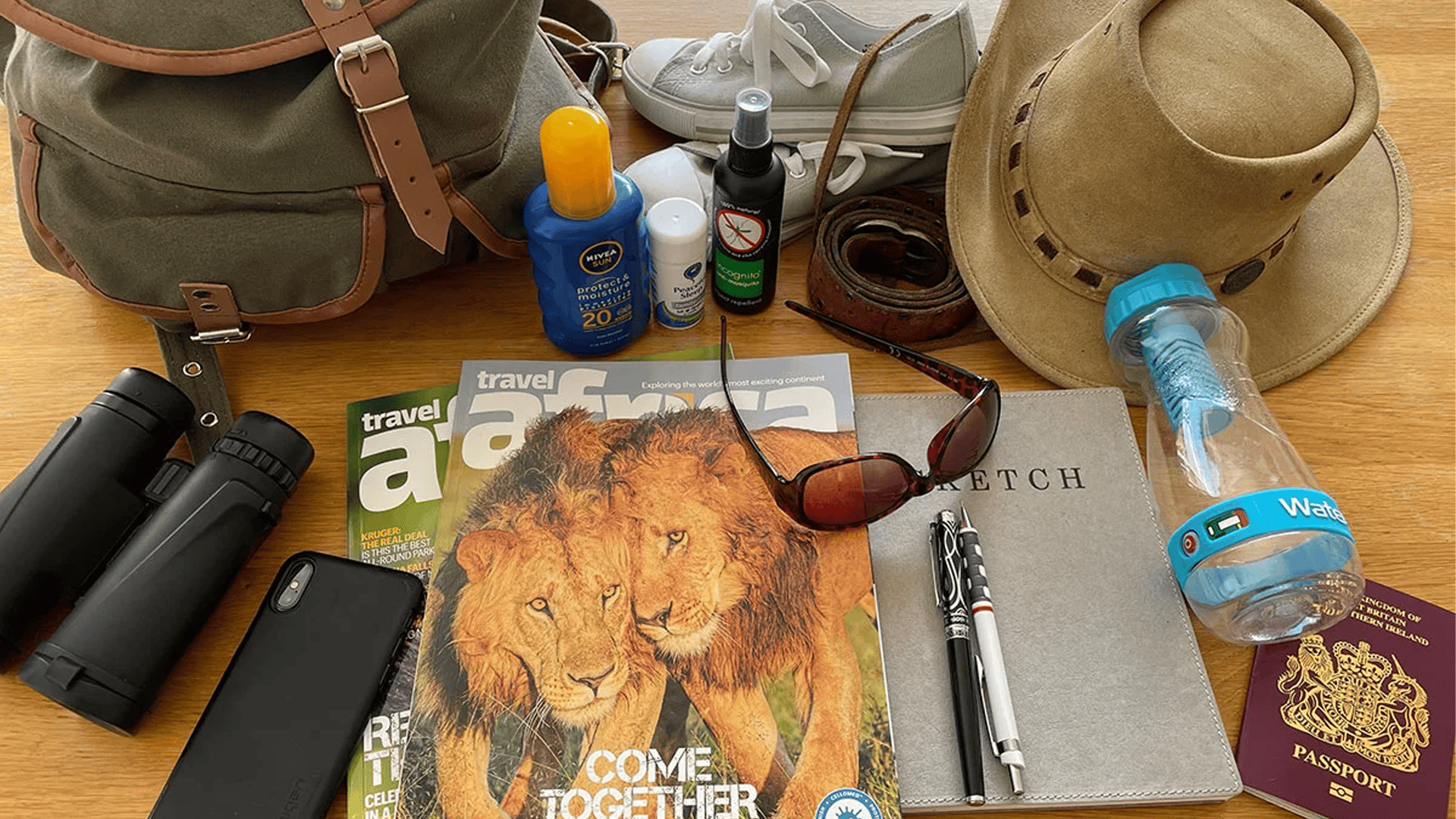
The clothing checklist (for any trip length, thanks to camp laundry):
- 3 to 4 short-sleeved shirts or t-shirts in neutral tones
- 2 long-sleeved shirts (sun protection by day, mosquito protection at dusk)
- 2 pairs of lightweight trousers (zip-off legs earn their keep)
- 1 pair of shorts
- 1 warm fleece or down jacket, non-negotiable, because dry-season game drives start near freezing in open vehicles
- 1 lightweight rain shell in the green season
- Underwear and socks for 4 to 5 days
- Comfortable closed walking shoes (broken in, not new) plus sandals for camp
- Wide-brimmed hat with a strap, and a warm beanie for cold mornings
- Swimsuit, because most camps have pools
- One slightly nicer casual outfit if your trip ends in a city or on the coast
What you don’t need: safari-branded gear, more than one “outfit per day,” or anything requiring ironing. Camps are informal, and everyone at dinner is wearing the same khaki they wore at breakfast.
Optics and camera gear: the difference-makers
Binoculars are essential, one pair per person. This is the single most underrated packing decision. Sharing binoculars halves every sighting, and guides consistently rank a personal pair of 8×42 or 10×42 binoculars as the item that most improves a first-timer’s safari.
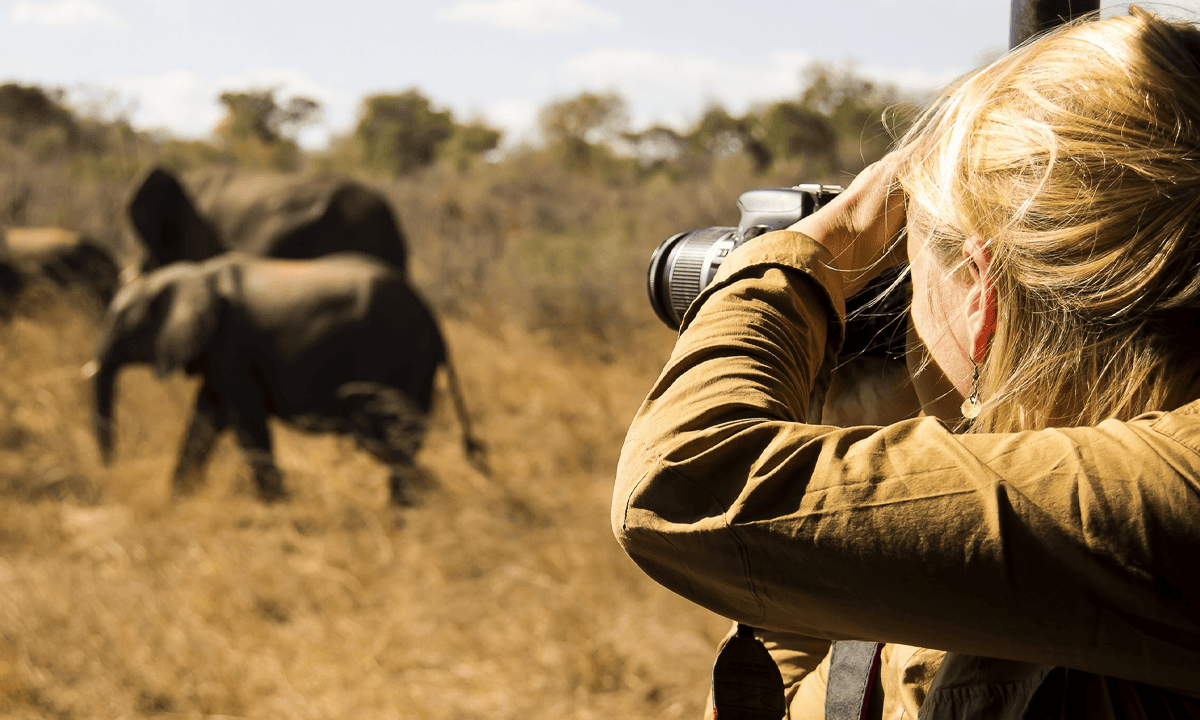
Cameras: bring real reach if photography matters to you. Phone cameras handle landscapes and camp life beautifully but cannot reach a leopard at eighty meters. If you care about wildlife photos, a camera with at least 300mm of zoom (400mm is better) changes what you bring home. Pack spare batteries, double the memory cards you think you need, a lens cloth for dust, and a beanbag or small support for shooting from vehicles. Charging is available at virtually all camps, though sometimes only in main areas, so a power bank earns its place.
The practical electronics list: universal plug adapter (check your countries’ socket types, as South Africa’s differs from Kenya’s), power bank, headlamp or small torch for the walk to your tent, and phone. Leave the drone at home; they’re banned or heavily restricted in most African parks.
Health kit and documents
The health essentials:
- Malaria prophylaxis if your route includes malaria zones, started before departure as prescribed. Discuss the right medication with a travel clinic 6 to 8 weeks before you fly.
- Insect repellent with DEET or picaridin, applied at dawn and dusk.
- High-SPF sunscreen and lip balm. The equatorial sun is stronger than it feels in a breezy open vehicle.
- Personal first-aid kit: plasters, antiseptic, antihistamines, rehydration salts, anti-diarrheal, painkillers, motion sickness tablets for light aircraft, and every prescription medication in original packaging with copies of the prescriptions.
- Hand sanitizer and wet wipes, the unsung heroes of dusty game drives.
Camps carry first-aid supplies and guides are trained, but remote locations mean your personal kit matters more than on a city trip. Vaccination requirements (yellow fever certificates are mandatory for some routes) and detailed medical preparation are covered in our health and safety tips, which are worth reading alongside a travel clinic visit.
Documents: passport with six months’ validity and blank pages, visas arranged per country, yellow fever certificate where required, travel insurance details printed and saved offline, flight documents, and a photocopy or photo of everything stored separately from the originals.
The small items veterans never skip
- A buff or scarf: dust protection on dry-season drives, warmth on cold mornings.
- Sunglasses with a retainer strap, because open vehicles and wind are a running theme.
- A dry bag or ziplock bags for electronics during water activities or sudden rain.
- A small daypack for the vehicle: water, camera, layers, repellent.
- Cash in small US dollar denominations for tips, since guides and camp staff are customarily tipped and change is scarce in the bush. Newer-series bills are preferred across much of the region.
- A paperback or downloaded content for the midday siesta hours.
What to leave at home
Hard suitcases, camouflage anything, blue and black field clothing, drones, excessive toiletries (camps provide them), jewelry and valuables, a hairdryer (camps that have power provide them; canvas camps won’t run one), and more than five days of clothing. Every kilogram you cut is a kilogram of camera gear or comfort you can add.
This checklist covers the field details; for a concise, category-organized version, our what to take on safari planning page is the quick-reference companion to keep with your booking documents.
Frequently asked questions
Which clothing colors should you avoid on safari?
Avoid blue and black, which attract tsetse flies; white, which shows dust and stands out; and camouflage patterns, which are illegal for civilians in several African countries. Stick to khaki, olive, tan, and brown.
Are there baggage weight limits for safari flights?
Yes, and they’re strict. Light aircraft transfers between camps commonly limit luggage to 15 kg per person in soft-sided bags, sometimes including hand luggage. Check the specific limits for your route and pack to the tightest one.
Are a camera and binoculars essential for a safari?
Binoculars are essential: one pair per person, ideally 8×42 or 10×42, and they improve every single sighting. A camera is essential only if photographs matter to you; in that case, bring at least 300mm of zoom, spare batteries, and more memory than you think you need.
Should you pack malaria medication and a first-aid kit?
Yes, if your route includes malaria zones. Arrange prophylaxis through a travel clinic 6 to 8 weeks before departure, and carry a personal first-aid kit with prescriptions in original packaging. Remote camps make self-sufficiency for minor issues genuinely important.
Pack once, pack right
The formula is simple: a soft bag under 15 kg, a neutral four-day wardrobe, serious binoculars, a proper health kit, and layers for the cold mornings nobody warns you about. Everything else is detail.
If you’re unsure about the limits or requirements on your specific route, ask us before you buy a duffel. We’ll tell you exactly what your flights allow and what your camps provide, so you don’t pack any wasted weight.