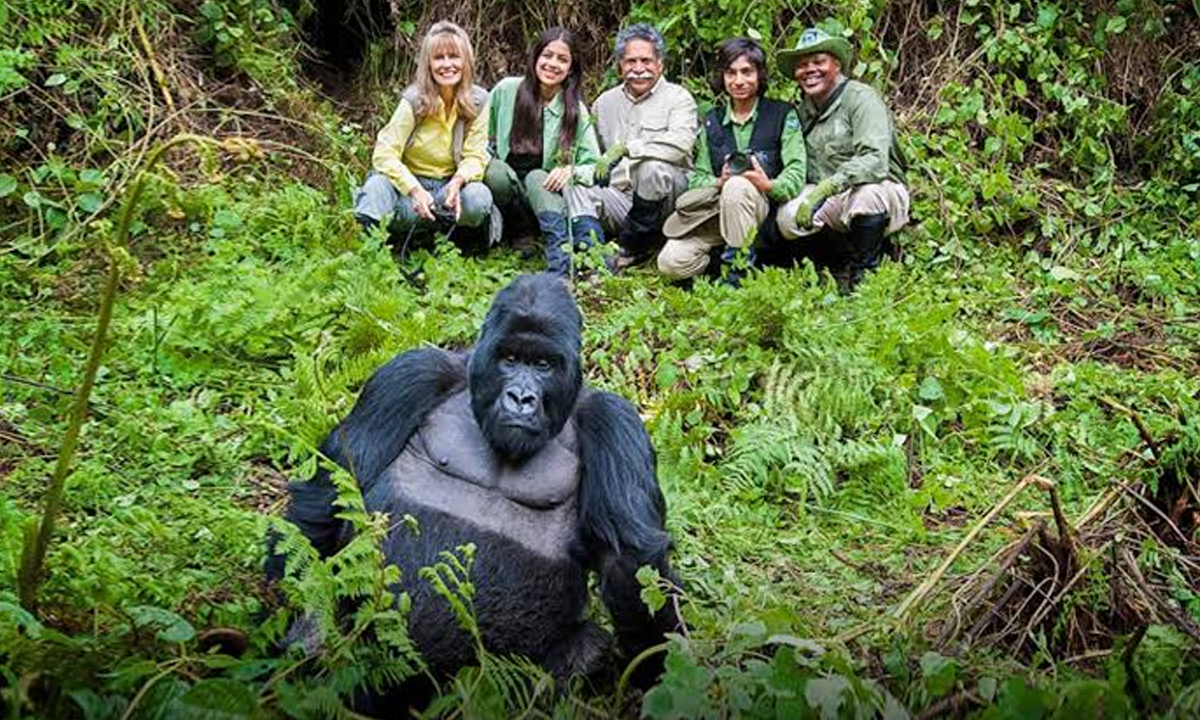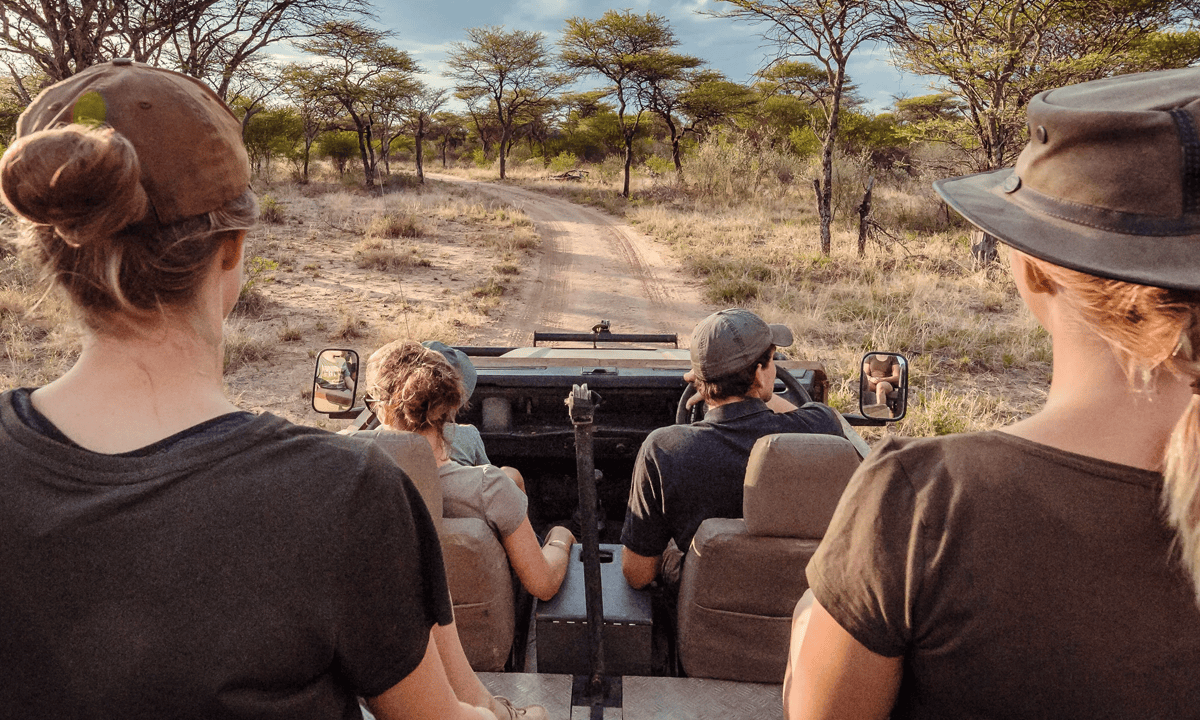
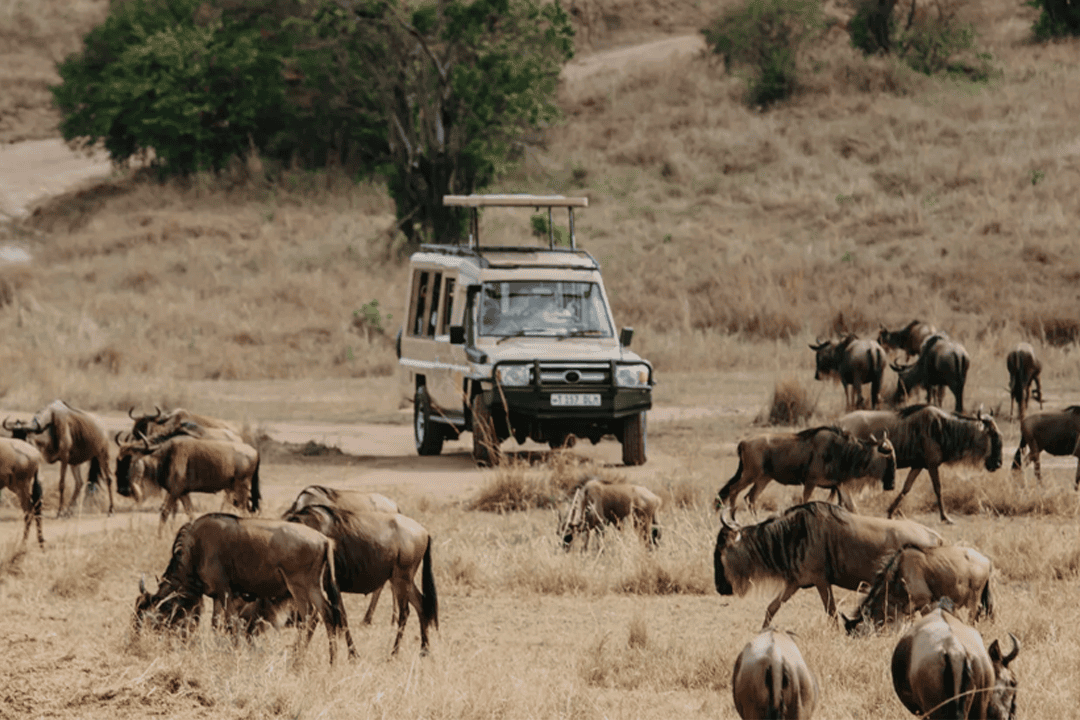
Africa is not a single safari. The plains of the Maasai Mara, the caldera of Ngorongoro, and the flooded channels of the Okavango Delta are three completely different worlds, and the travelers who experience all of them in one trip come home with the most complete picture of the continent that a single journey can offer.
This guide lays out how a multi-country African safari across Kenya, Tanzania, and Botswana actually works: the routing, the timing, what each leg delivers, and roughly what it costs. It’s an ambitious trip, but for the right traveler, it’s the safari of a lifetime.
Why combine three countries?
Single-country safaris are excellent, but each one shows you a slice of Africa. Combining East Africa (Kenya and Tanzania) with Southern Africa (Botswana) gives you the full spectrum:
- Kenya delivers the classic open-plains safari, the Maasai Mara, big cats on the savanna, and the cultural depth of the Maasai people.
- Tanzania delivers the Serengeti and the Ngorongoro Crater, two of the most famous wildlife landscapes on Earth, plus the option to finish on the beaches of Zanzibar.
- Botswana delivers something neither East African country can: the water-based safari of the Okavango Delta and the elephant herds of Chobe, experienced in small, exclusive camps.
Put together, you get savanna and wetland, open plains and flooded delta, the Great Migration ecosystem, and the Kalahari’s edge. It’s the difference between seeing Africa and understanding its range.
The East Africa backbone
The natural starting point for this trip is a structured East Africa itinerary that links Kenya and Tanzania, since the two countries share the Great Migration ecosystem and connect logically by road and air.
Our flagship East Africa safari itinerary traces exactly this route. It begins in Nairobi, then moves to Amboseli National Park beneath Mount Kilimanjaro (famous for its elephant herds), crosses into Tanzania at the Namanga border, and works through Tanzania’s iconic parks: Tarangire with its baobabs, the Ngorongoro Crater and Conservation Area, the Ndutu plains, and the Serengeti itself. The journey can finish with a flight to Zanzibar for beaches, spice farms, and the history of Stone Town.
That single itinerary already delivers the heart of an East African safari: Kenya’s Amboseli elephants, Tanzania’s Tarangire and Ngorongoro, and the Serengeti’s plains and river systems. It forms the backbone of the multi-country trip. The Botswana leg then gets added on the end.
Adding Botswana
Here’s the practical reality: Botswana is not part of the standard East Africa itinerary. It’s a separate leg that gets bolted on through a tailor-made extension, flying from East Africa down to Southern Africa to continue the journey.
This is where a multi-country safari becomes a custom-built trip rather than an off-the-shelf package. After completing the Kenya and Tanzania circuit, you fly south (typically routing through Nairobi or Johannesburg) into Botswana to experience a completely different style of safari.
The Botswana leg usually centers on two regions:
- The Okavango Delta for water-based game drives, mokoro canoe trips through the channels, and the exclusivity of small camps in private concessions.
- Chobe National Park for the densest elephant concentration on the continent, and sunset boat cruises on the Chobe River.
This is the leg that transforms the trip from a great East African safari into a true cross-continental journey. To build it properly, you add Botswana to your safari as a custom extension matched to your dates, budget, and the camps that have availability.
A sample multi-country route
A realistic structure for the full Kenya, Tanzania, and Botswana journey looks roughly like this. The exact days flex based on your pace and budget, but this gives a sense of the shape.
Days 1 to 3: Kenya. Arrive in Nairobi, then on to Amboseli National Park for elephant herds and Kilimanjaro views. The classic East African opening.
Days 4 to 10: Tanzania. Cross into Tanzania and work through Tarangire, the Ngorongoro Crater, the Ndutu plains, and the Serengeti. This is the wildlife-dense core of the East Africa leg, including the chance of Great Migration action depending on the season.
Days 11 to 13: transition and the Delta. Fly south into Botswana and into the Okavango Delta. Trade the open plains for water channels, mokoro canoes, and small camps. A complete change of pace and landscape.
Days 14 to 16: Chobe and departure. Move to Chobe for elephant herds and river cruises, then depart, optionally via Victoria Falls (just over an hour from Chobe’s gateway) for a final flourish.
That’s a roughly two-week-plus trip covering three countries and at least four distinct ecosystems. Travelers with more time often extend the East Africa leg with Zanzibar, or add days in the Delta, since rushing the Okavango undersells it.
Best time for a multi-country safari
Timing a three-country trip means finding a window that works for both East Africa and Botswana, and the good news is that their peak seasons overlap.
June to October is the sweet spot. This is the dry season across both regions:
- In East Africa, this is peak Great Migration season, with the herds in the Maasai Mara and northern Serengeti, river crossings, and excellent general game viewing.
- In Botswana, this is when the Okavango flood peaks (the water arrives from Angola months after the rains) and game concentrates around the Chobe River, making it the best time for both the Delta and Chobe.
A trip in this window catches the best of both worlds: the migration in East Africa and the flooded Delta in Botswana, simultaneously. It’s the single best reason to time a multi-country safari for the middle of the year.
Travelers who go in the East African calving season instead (January to March, when the southern Serengeti and Ndutu fill with newborns and predators) get a different but equally spectacular East African experience, though Botswana’s dry-season advantages are strongest mid-year.
What it costs
A multi-country safari is a significant investment, and being honest about the budget upfront saves disappointment later.
The cost is essentially the sum of the parts plus the inter-country flights:
- The East Africa leg (Kenya and Tanzania) varies widely by accommodation level, from 3 to 4 star lodges and tented camps up to 4 to 5 star properties. The standard itinerary covers park fees, game drives in a specialized safari vehicle, internal transfers, and most meals.
- The Botswana leg is the premium portion. Botswana’s small-camp, fly-in model is expensive by design, with quality camps running from around $700 per person per night in shoulder season to well over $2,000 in peak, plus the essential light-aircraft transfers.
- Inter-country flights between East Africa and Southern Africa add a meaningful long-haul cost on top.
As a rough planning figure, a full multi-country trip of this kind typically starts in the low-to-mid five figures per person and climbs from there depending on how luxurious the camps are and how long you spend in Botswana. The Botswana leg is usually the single largest line item.
For a clear breakdown of how these costs are structured and what drives them, see our guidance on multi-country safari cost, which explains exactly what you’re paying for at each tier.
Why this trip has to be tailor-made
A multi-country safari is not something you book off a shelf. Too many moving parts (international and internal flights, camp availability across two regions, border crossings, seasonal timing) have to align, and the only way to make it work is to build it as a custom trip around your specific dates and priorities.
This is exactly what a tailor-made multi-country safari is designed for. A tailor-made trip lets you set the pace, choose your accommodation level on each leg (you might go mid-range in East Africa and splurge in the Delta, or vice versa), decide whether to add Zanzibar or Victoria Falls, and ensure every flight and transfer connects properly across the whole journey.
The complexity is why you should use an operator who can coordinate the entire trip end-to-end, rather than trying to stitch together separate bookings yourself and hoping the connections hold.
Ready to build your multi-country safari?
Kenya, Tanzania, and Botswana in one journey is the most complete safari Africa offers: the migration and the Delta, the savanna and the wetland, the open plains and the flooded channels. It takes time, budget, and careful planning, but for the traveler who wants to understand the full range of the continent in a single trip, nothing else compares.
Reach out to start building it. We’ll design the route around your dates, your budget split across the legs, and the experiences that matter most to you, and we’ll make sure every connection across all three countries actually works.