The most useless question in safari planning is “what’s the best destination?” The useful question is “best for whom?” A honeymooning couple, a family with an eight-year-old, and a traveler who wants to trek to gorillas through mountain forest will all have extraordinary trips in East Africa, but they should not book the same one.
This guide sorts East Africa safari destinations by traveler type, so you can start from who’s going and let the destination follow.
The quick framework
East Africa’s core options, mapped to what each does best:
- Kenya: the most versatile. Family-friendly conservancies, honeymoon-grade camps, and the widest range of budgets. The default starting point for most traveler types.
- Tanzania: the big landscapes. The Serengeti and Ngorongoro for scale and drama, Zanzibar for the beach finish. Slightly pricier and slightly wilder than Kenya.
- Uganda and Rwanda: the adventure specialists. Mountain gorillas and chimpanzees, added to a Kenya or Tanzania circuit or taken as a dedicated trip.
Now the honest sorting, by traveler.
For families: Kenya first, structured carefully
Kenya is the strongest family destination in East Africa, and the reasons are practical rather than romantic:
- The Mara conservancies (Mara North, Naboisho, and neighbors) allow flexible, private game drives, which matters enormously when a child’s attention span sets the schedule. Several camps run genuine kids’ programs: tracking lessons, Maasai cultural activities, junior ranger content.
- Short flying times between Nairobi and the parks keep travel days manageable for young travelers.
- Amboseli adds elephants at close range and Kilimanjaro views, high-reward sightings that don’t require patience.
The structural rules for family success matter more than the park choice: check camp minimum-age policies before falling in love with a property (commonly 6 to 8 years, sometimes higher), keep game drives to two or three hours, choose one or two camps rather than four, and discuss malaria prophylaxis for children with a travel clinic early, since medication suitability varies by age. Tanzania works well for families with older children who can handle longer drives between parks; the Serengeti’s scale rewards teenagers more than toddlers.
The full checklist of age policies, health considerations, and camp features is set out in our guide Family Safaris – Factors to Consider, which is the right next read for any parent planning seriously.
For honeymooners: Tanzania and Zanzibar, or the Mara in style
A honeymoon safari in Africa runs on two ingredients: privacy and contrast. East Africa’s classic formula delivers both.
The Tanzania + Zanzibar pairing is the definitive version: a week of the Serengeti and Ngorongoro (with camps offering private dinners, plunge pools, and balloon flights at dawn), then a short flight to Zanzibar for the beach chapter: Stone Town’s history, spice farms, and the Indian Ocean. The bush-to-beach arc lets the trip build and then exhale, which is exactly the rhythm a post-wedding trip needs.
The Kenya alternative concentrates the romance in the Mara’s private conservancies, where exclusive-use vehicles, off-road driving, and sundowners on empty ridgelines create the privacy that the busier main reserve can’t. Pair with the Kenyan coast (Diani or Lamu) for the beach finish.
The honeymoon-specific playbook: tell every camp it’s your honeymoon (upgrades and surprises follow), book the signature suites 9 to 12 months ahead for peak season, take a private vehicle for at least part of the trip, and end on the beach rather than the bush so you fly home rested. Couples traveling in the green season trade a little weather risk for lower rates, empty sightings, and a landscape at its most beautiful, an underrated honeymoon choice.
For adventure travelers: Uganda, Rwanda, and the active edge
If your idea of a safari involves your own two feet, East Africa’s adventure tier goes beyond the game drive:
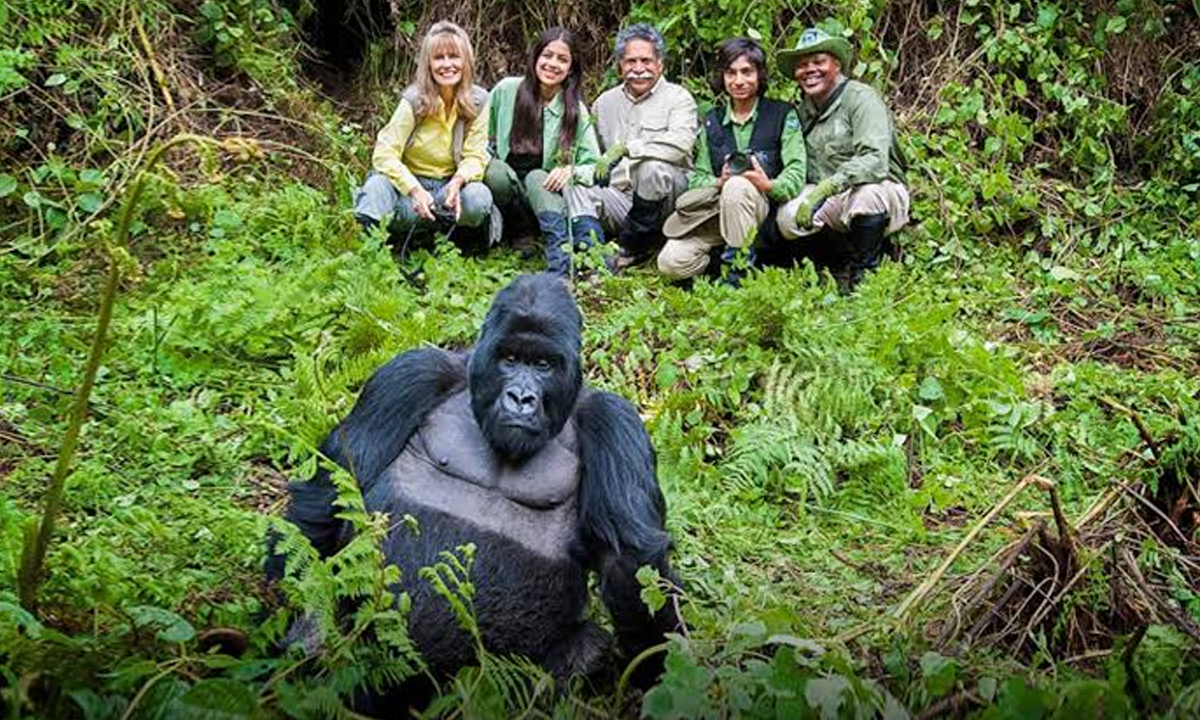
Gorilla trekking is the region’s singular adventure. Uganda’s Bwindi Impenetrable Forest and Rwanda’s Volcanoes National Park protect the mountain gorillas, and the trek (one to several hours through steep forest, then one hour with a habituated family) is consistently described by travelers as the most powerful wildlife encounter of their lives. Rwanda is the quicker, costlier option; Uganda is the better-value, longer-trek version. Permits are limited and sell out months ahead.
Chimpanzee tracking in Uganda’s Kibale Forest adds a second primate adventure, faster-moving and louder than the gorillas.
The active add-ons across the region: walking safaris in Kenya’s Laikipia conservancies, multi-day Mount Kenya or Kilimanjaro treks for serious hikers, balloon flights over the Serengeti or Mara, and camel-supported walks in Samburu country. Adventure safaris in East Africa are best built as combinations: a gorilla trek bolted onto a Mara or Serengeti circuit turns a classic safari into a genuinely once-in-a-lifetime route.
One honest constraint: gorilla trekking has minimum age requirements (15 in both countries), which is a structural reason adventure-heavy itineraries suit couples and adult groups better than young families.
The cross-cutting decision: scheduled group or tailor-made
Whichever traveler type you are, one structural choice shapes cost and experience: joining a scheduled group departure versus commissioning a private, tailor-made itinerary.
Scheduled trips run on set dates with fixed routes and shared vehicles. They cost meaningfully less, suit solo travelers and flexible couples, and remove every planning decision. Tailor-made trips cost more and hand you control of pace, camps, and route, which matters most for exactly the travelers this guide is sorting: families who need age-appropriate pacing, honeymooners who want privacy, and adventurers stitching gorillas onto a classic circuit. The full comparison is laid out in Scheduled vs Tailor-made safaris, and it’s worth reading before you request quotes, because the two formats aren’t priced or planned the same way.
For a structured starting point that covers the region’s greatest hits (Amboseli, Tarangire, Ngorongoro, the Serengeti, and a Zanzibar finish), our Best of East Africa tour shows what a complete Kenya-Tanzania route looks like in practice; it adapts well to both family and honeymoon versions.
Frequently asked questions
What should you consider when planning a family safari?
Camp minimum-age policies, malaria considerations for children, game drive length (two to three hours is the realistic ceiling for young kids), the presence of genuine kids’ programming, and pace: fewer camps with longer stays beat ambitious multi-park routes. Kenya’s Mara conservancies are the strongest starting point.
Which destinations are best for a honeymoon safari?
The Tanzania-plus-Zanzibar combination is the classic: Serengeti drama followed by Indian Ocean beaches. Kenya’s private Mara conservancies paired with the coast are the equally strong alternative. In both cases, private vehicles, early booking of signature suites, and a beach finish are what make the trip a honeymoon rather than just a safari.
What is the difference between a scheduled group safari and a tailor-made safari?
A scheduled safari runs on fixed dates and routes with other travelers, at a lower price. A tailor-made safari is built privately around your dates, pace, and priorities, at a higher price. Families, honeymooners, and adventure travelers with specific goals usually benefit most from tailor-made; budget-focused and solo travelers often do better on scheduled departures.
Which East African countries are best for a safari?
Kenya and Tanzania are the core: Kenya for versatility, access, and family-friendliness; Tanzania for the Serengeti’s scale and the Zanzibar beach finish. Uganda and Rwanda add the gorilla dimension for adventure-focused travelers. Most first-time itineraries center on one or both of the first two.
Start from who’s going
The destination question answers itself once the traveler question is answered: families toward Kenya’s conservancies, honeymooners toward Tanzania and the beach, adventurers toward the gorilla forests. To see everything the region offers before you commit, explore East Africa destinations in full, or reach out and tell us who’s traveling. We’ll match the route to the people, not the other way around.