Both countries share a border, a stretch of the Zambezi, and a reputation for some of the wildest safari country left in Africa. But the experiences they offer are genuinely different, and choosing wrong means spending serious money on a trip that doesn’t match what you actually wanted.
The short version: Botswana is the premium, water-based, low-volume safari built around the Okavango Delta. Zambia is the rugged, walking-focused, better-value safari built around South Luangwa and the Zambezi. This guide breaks down the real differences so you can pick the one that fits.
The core difference in one sentence
Botswana sells exclusivity and water; Zambia sells wilderness immersion and value.
Everything else follows from that. Botswana’s signature is gliding through the flooded Okavango Delta in a mokoro canoe at a price point that keeps crowds away. Zambia’s signature is walking through the bush on foot with an armed guide, getting closer to the wilderness for a fraction of the cost. Both are extraordinary. They just attract different travelers.
Okavango Delta vs. South Luangwa
The two flagship regions define each country’s safari character.
The Okavango Delta (Botswana)
The Okavango is a 5,800-square-mile inland delta where a river floods into the Kalahari instead of reaching the sea, creating a maze of channels, lagoons, and islands. It’s the only place in Africa where you routinely safari by water.
What defines it:
- Mokoro canoe safaris through silent reed channels
- Water-based game drives by motorboat when the flood peaks (roughly June to September)
- Land game drives on the larger islands like Chief’s Island in Moremi
- Exclusivity is enforced by private concessions that limit vehicle numbers.
- High prices are the entry ticket to the uncrowded experience.
The Delta is a destination for travelers who want their wildlife framed by water, lily pads, and the silence of a poled canoe, and who will pay for the privilege of having it largely to themselves. Our Botswana safari overview covers the Delta alongside Chobe and the Kalahari.
South Luangwa (Zambia)
South Luangwa is where the modern walking safari was invented, and it remains one of the best places in Africa to experience the bush on foot. The Luangwa River and its oxbow lagoons concentrate wildlife densely, and the park is famous for its leopards.
What defines it:
- Walking safaris led by expert guides and armed scouts, the park’s signature experience
- Outstanding leopard viewing, among the best on the continent
- Night drives, permitted in Zambian national parks (unlike many countries), reveal nocturnal species
- Dense game along the river, with huge concentrations in the dry season
- Strong value, with quality camps at meaningfully lower prices than Botswana
South Luangwa is a destination for travelers who want to feel the wilderness directly, to track game on foot, to spot a leopard hunting after dark, and to get more safari for their money. Our Zambia safari overview covers South Luangwa along with the Lower Zambezi.
Head-to-head comparison
| Factor | Botswana | Zambia |
| Signature experience | Mokoro and water-based safari in the Delta | Walking safari in South Luangwa |
| Flagship region | Okavango Delta, Chobe | South Luangwa, Lower Zambezi |
| Best for | Exclusivity, water, low crowds | Wilderness immersion, value, walking |
| Walking safaris | Available, but not the focus | The birthplace and the focus |
| Night drives | Limited (mainly in private concessions) | Widely permitted in national parks |
| Big cats | Strong lion and leopard | Exceptional leopard, strong lion |
| Elephants | Among the densest on Earth (Chobe) | Strong, especially riverine |
| Water-based safari | World-class (the Delta) | Canoeing on the Zambezi (Lower Zambezi) |
| Crowd levels | Very low (by design) | Low |
| Price level | Premium to luxury | Mid-range to upper, better value |
| Ease of access | Light aircraft network, via Maun/Kasane | Via Lusaka or direct to Mfuwe |
| Best season | May to October (dry, flood peak) | May to October (dry); Lower Zambezi best Jun to Oct |
| Victoria Falls access | Via Kasane and Chobe | Direct (Livingstone, Zambian side) |
| First-timer friendliness | High (comfortable, guided) | High, though rougher and more adventurous |
Wildlife: what you’ll actually see
Both countries deliver the full range of African safari wildlife, but with different emphases.
Big cats. Both have excellent lion and leopard. Zambia’s South Luangwa has a particular reputation for leopards, helped by the night drives that let you watch them hunt after dark. Botswana’s Delta and Linyanti concessions are outstanding for lion, and both countries are among the best places to see endangered African wild dogs.
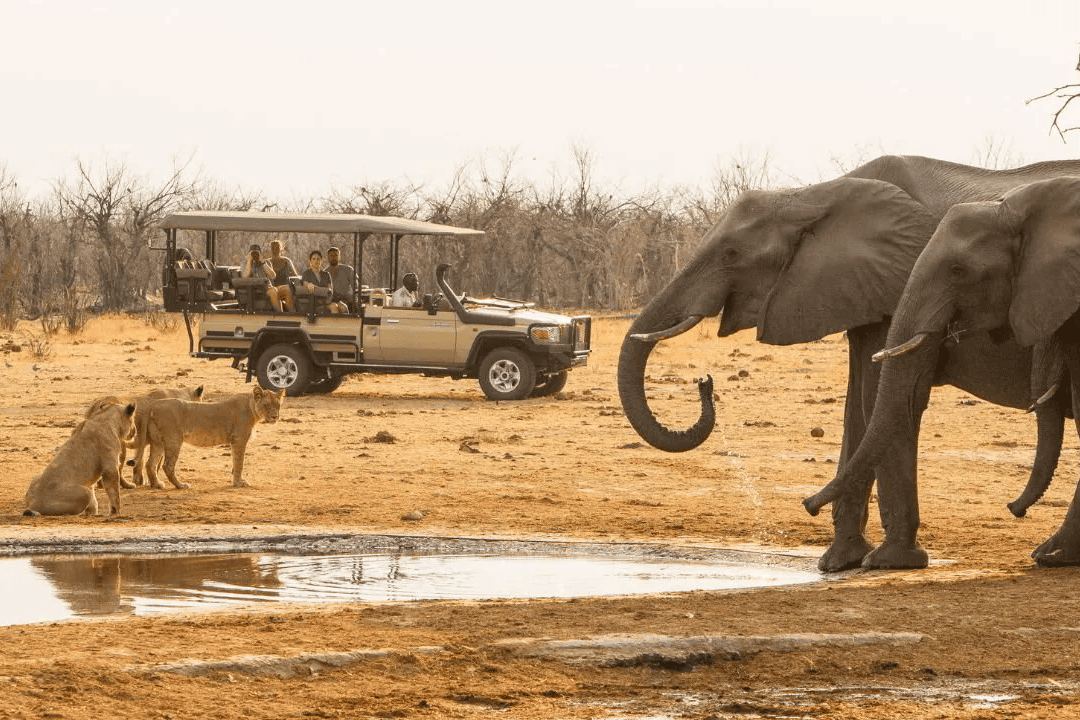
Elephants. Botswana wins on sheer numbers. The Chobe River in the dry season hosts one of the densest elephant concentrations on the planet, with herds of dozens routinely at the water. Zambia’s elephants are strong too, particularly along the Luangwa and Zambezi, but not at Chobe’s scale.
Water-based wildlife. Botswana’s Delta is unmatched for the water-and-wildlife combination. Zambia counters with canoeing safaris on the Lower Zambezi, drifting past elephants on the bank and hippos in the channels, which is a different but equally memorable water experience.
The walking advantage. Zambia’s walking safaris let you engage with the smaller details that vehicles skip: tracks, dung, insects, birds, the texture of the bush. It’s a more immersive, ground-level way to understand an ecosystem, and for many travelers it’s the most memorable part of a Zambian trip.
Cost: the honest breakdown
Budget is often the deciding factor, and the gap is real.
Botswana is one of the most expensive safari destinations in Africa by design. Quality camps in the Delta and Chobe typically run from around $700 per person per night in shoulder season to well over $2,000 in peak. A complete Botswana trip of 8 to 10 nights commonly lands between $9,000 and $18,000 per person all-in, driven up by the essential light-aircraft transfers between remote camps.
Zambia delivers comparable wilderness quality at meaningfully lower prices. Excellent camps are available across a wider range, and a strong Zambian safari can be built for significantly less than the Botswana equivalent, particularly if you focus on South Luangwa and travel in the shoulder season.
The value question is genuine: Zambia often gives you more raw safari (more game time, walking, night drives) for less money, while Botswana gives you exclusivity, water, and polish for a premium. Neither is “better value” in the abstract; it depends on whether you’re paying for the water and the exclusivity or for the immersion and the game time.
For a fuller picture of how safari costs are structured across destinations, our pricing guidance is worth reading before you commit to either.
The Victoria Falls factor
Here’s a point that often tips the decision: both countries sit near Victoria Falls, but Zambia has it on its doorstep.
The Falls straddle the Zambia-Zimbabwe border. From the Zambian side (at Livingstone), you get the dramatic close-up experience, including the famous Devil’s Pool when water levels allow. A Zambian safari combines naturally with the Falls because Livingstone is a major gateway, making a Victoria Falls add-on from Zambia one of the easiest and most rewarding extensions in Southern Africa.
Botswana reaches the Falls too, via Kasane and Chobe (just over an hour away), so a Botswana trip can also bolt on the Falls. But the Zambian connection is more direct, and pairing South Luangwa or the Lower Zambezi with a few days at the Falls makes for a beautifully coherent Zambian itinerary.
Which should you choose?
Choose Botswana if: you want the Okavango Delta’s water-based safari, you value exclusivity and low crowds above all, you want the densest elephant viewing on the continent at Chobe, polish and comfort matter to you, and the premium price is within reach. Botswana is the choice for a milestone trip where exclusivity is the point.
Choose Zambia if: you want to walk in the bush rather than only drive, you want exceptional leopard viewing and night drives, you want more game time and immersion for your money, you’d like Victoria Falls as a natural add-on, and you’re comfortable with a slightly more rugged, adventurous experience. Zambia is the choice for the traveler who wants depth and value over polish.
Do both if: you have the time and budget for a longer Southern Africa trip. The two countries complement each other beautifully: Botswana’s water and exclusivity paired with Zambia’s walking and value, linked through Victoria Falls in the middle. A combined itinerary is one of the great Southern African journeys.
For help weighing these and other regions against each other, our guide to choosing your safari destination lays out the full set of options.
Ready to choose your safari?
Botswana and Zambia are both world-class, and the “right” answer comes down to a simple question: are you paying for water and exclusivity, or for immersion and value? Once that’s clear, the rest of the itinerary follows naturally.
Reach out to start planning. We’ll match the country, parks, and season to what you actually want from the trip, and tell you honestly which one fits, or whether you should be doing both.