When most travelers hear “safari,” they think Africa — Land Cruisers, savanna, the Big Five. But the word originally just means “journey,” and there’s an argument to be made that the closest thing to a true wildlife journey in North America is an Alaska safari.
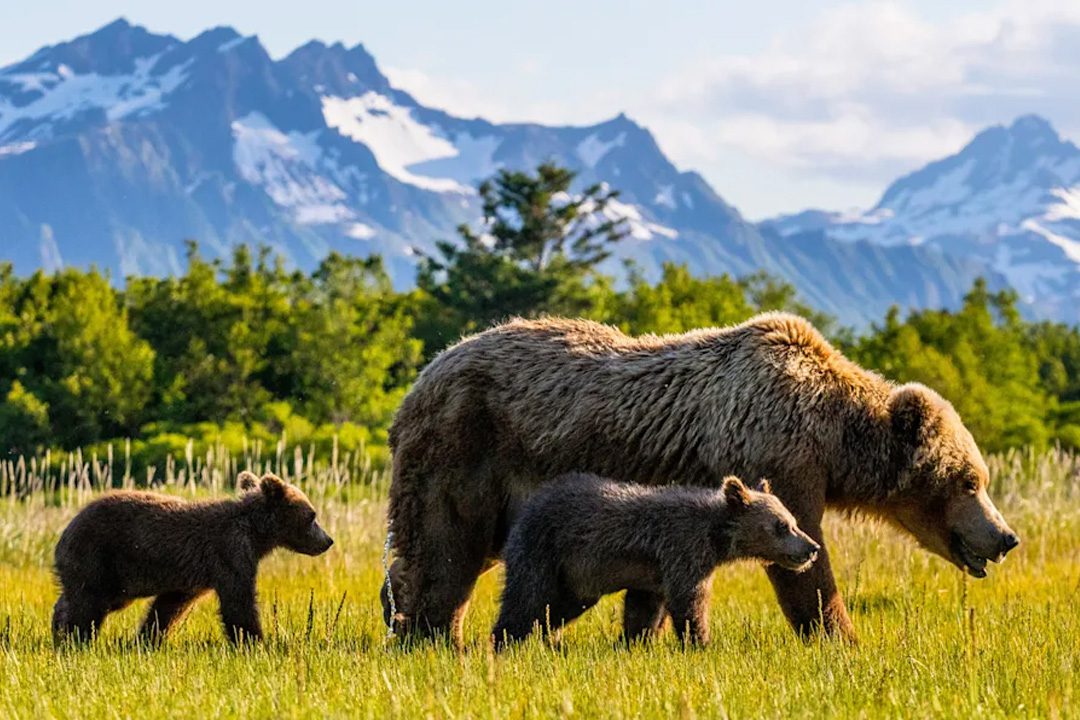
Brown bears feeding on salmon at Brooks Falls. Humpback whales bubble-net feeding in Kenai Fjords. Caribou moving across the tundra under Denali’s 20,310-foot summit. It’s wilderness on a scale that’s genuinely comparable to anything in Africa, and for North American travelers, it’s reachable without a passport or a 16-hour flight.
This guide walks through what an Alaska wildlife safari actually involves, when to go, and what makes it different from a more traditional vacation in the state.
Why call it a safari?
The framing matters. A cruise-and-shore-excursion trip through Alaska’s Inside Passage is a great vacation, but it’s not really a wildlife safari. A safari is structured around the wildlife with guided viewing, expert naturalists, deliberate access to remote areas, and itineraries built around what you want to see in the wild.
An Alaska wildlife safari typically includes some combination of:
- Brown bear viewing (often Katmai, Lake Clark, or Admiralty Island)
- Whale watching in productive feeding grounds
- Denali National Park for caribou, grizzly, Dall sheep, moose, and wolf
- Smaller-vessel cruising in Kenai Fjords or Prince William Sound
- River and tundra access by jet boat, float plane, or guided wilderness drive
It’s not a replacement for an African safari as the species and landscape are completely different, but for travelers who love wildlife and want a genuinely wild experience without leaving North America, it’s hard to top.
Best time to visit
Alaska’s wildlife season is short and intense. Most viewing happens June through September, with each month offering a slightly different focus.
June brings long daylight (close to 20 hours in the interior), wildflowers blooming, and the first bears emerging onto salmon streams. Whale activity is building in the Inside Passage. Denali is open and game is active. This is probably the most underrated month — good wildlife, lower crowds, and the landscape still feels like spring.
July is peak. Salmon are running, bears are concentrated on rivers, humpback whales are feeding actively, and the weather is as warm and stable as Alaska gets. Brooks Falls in Katmai sees its highest concentrations of bears. Itineraries fill up months in advance.
August is also excellent, with bears moving from rivers to coastal sedge meadows as salmon runs shift, and silver salmon coming in. Whale activity remains strong. The first hint of fall color appears late in the month.
September is shoulder season — fall colors, bears still feeding hard before hibernation, fewer tourists, lower rates, but also less predictable weather. The aurora becomes visible again on clear nights toward the end of the month. A great choice for travelers who want fewer people and more atmosphere.
Outside June to September, most wildlife lodges close, transportation options narrow dramatically, and the state pivots into a different kind of winter trip — northern lights, dog sledding, ice. Both are great experiences, but they’re different trips.
Bear viewing
For most travelers, this is the headline. Alaska holds the densest concentration of brown bears (coastal grizzlies) in the world, and there are a handful of places where you can watch them at close range in remarkable safety.
Katmai National Park
Brooks Falls in Katmai is the iconic image — brown bears standing in the falls, jaws open, waiting for salmon to jump into their mouths. It’s the place every wildlife photographer has on their list, and it deserves the reputation. The viewing platforms are well-managed, bear density during the July salmon run is extraordinary, and the access (a float plane from King Salmon) is part of the adventure.
Brooks is busy in July. Day trips from Anchorage are popular but rushed; staying at Brooks Lodge or a nearby fly-in lodge gives you multiple days at the platforms and time on other parts of the park.
Lake Clark National Park
A quieter alternative to Katmai with comparable bear density. Bears here feed on sedge grass, clams, and salmon depending on the season, and they’re often viewable on the coastal meadows in good light. Photography opportunities are excellent, and the park sees a fraction of Katmai’s visitor numbers.
Admiralty Island
In southeast Alaska near Juneau, Admiralty has roughly one brown bear per square mile — among the highest densities anywhere. The Pack Creek viewing area requires permits but offers an intimate experience with smaller groups.
What to expect
Bear viewing in Alaska is done with experienced guides who understand bear behavior intimately. You’re typically on foot at viewing platforms or coastal flats, with the guide maintaining proper distance and reading the bears. Done right, it’s one of the safer wildlife encounters available — these bears have habituated to people in a controlled way over decades, and they’re focused on food, not visitors.
Whale watching
Alaska’s coastal waters are some of the most productive whale habitat in the world. The combination of cold currents, nutrient upwelling, and long summer daylight produces a feeding frenzy that draws humpbacks from Hawaii and Mexico to travel thousands of miles to reach.
The most reliable whale-watching regions:
- Kenai Fjords National Park (out of Seward) for humpbacks, orcas, gray whales, sea otters, Steller sea lions, and tidewater glaciers
- Inside Passage (out of Juneau or Sitka) for humpback bubble-net feeding, a coordinated hunting behavior found in only a few places worldwide
- Prince William Sound for orcas, humpbacks, and the dramatic Columbia and Meares glaciers
Bubble-net feeding is the Alaska whale-watching signature. A coordinated group of humpbacks dives below a school of herring, blows a circular curtain of bubbles to corral the fish, then surges to the surface with mouths open. It’s one of the most extraordinary animal behaviors visible from a small boat anywhere on Earth.
Small-vessel operators — 12 to 30 passengers — are dramatically better than large cruise ships for actual wildlife viewing. They can get closer, react faster, and spend longer at sightings.
Denali National Park
Six million acres. One road. Five primary big-game species. Denali is Alaska’s most famous park for good reason.
The park road extends about 92 miles into the interior (closures in recent years have shortened practical access, so check current conditions), and game viewing happens by bus or guided vehicle along that corridor. You’re not on close-range game drives the way you would be in Africa — Denali is about scale, distance, and the patience to spot wildlife across vast tundra.
The five main species:
- Grizzly bear — interior, smaller than coastal browns, often in open tundra
- Caribou — moving in small groups across the park
- Moose — in the lower-elevation willow areas
- Dall sheep — on the high ridges, often visible with binoculars or a spotting scope
- Wolf — uncommon but seen by patient visitors, particularly at den sites in early summer
The mountain itself — Denali, the highest peak in North America — is in cloud roughly two-thirds of the time. If you see it clearly, count it as a win. Multiple-day stays significantly improve your odds.
Riverboat, jet boat, and SeaLife Center
Alaska’s interior is best accessed by water. Riverboats out of Fairbanks run the Chena and Tanana rivers and offer one of the few ways to see Athabaskan cultural sites alongside wildlife viewing. The Riverboat Discovery in particular has been operating for generations and combines wildlife spotting with genuine cultural depth.
The Alaska SeaLife Center in Seward is the state’s only public aquarium and rehabilitation facility. It’s not a wildlife encounter in the wild, but it’s an excellent stop for understanding the marine ecosystem before or after a Kenai Fjords trip — particularly if you’re traveling with kids.
For a sample itinerary that ties these elements together — bears, whales, Denali, riverboat, and the SeaLife Center — see our Alaska safari experiences and our flagship Alaska wildlife tours, which is built to cover the full state in a single trip.
Packing and logistics
Alaska is unusual: it can be 75°F and sunny one day and 45°F with rain the next. Layering is everything.
- Waterproof outer shell: non-negotiable, even in July
- Insulating mid-layer: fleece or light down
- Quick-dry base layers
- Waterproof boots: for tidal flats, riverbanks, and trail walking
- Binoculars: 8×42 or 10×42 is ideal
- Real camera if you care about wildlife photography, phones don’t reach the distances you’ll need
- Bear spray only if you’re hiking independently; lodges and guides handle this on group trips
Internal flights are part of nearly every Alaska itinerary. Light aircraft to remote lodges, scheduled Alaska Airlines hops between hubs, and float planes for bear viewing. Build buffer days into your schedule — weather cancellations are routine and not negotiable.
For broader trip-planning guidance, our plan your adventure section covers logistics, packing, and timing across all our destinations.
How it fits into a wildlife traveler’s portfolio
For travelers who love safari-style trips, Alaska earns a place alongside African destinations, the Galapagos, and the Pantanal. It offers something none of those do: charismatic megafauna in genuine wilderness, three or four hours from the West Coast on a domestic flight, with a season short enough that every day in the field feels concentrated.
If you’ve done an African safari and want a comparable wildlife experience closer to home, Alaska is the most natural next step. If you’re new to wildlife travel and want to test how much you love it before committing to Africa, Alaska is an outstanding first trip, and our broader safari experiences page covers comparable wildlife journeys around the world.
Ready to plan your Alaska safari?
Bears, whales, Denali, and a state large enough to absorb every traveler who visits it. Alaska is one of the few places left where wildlife dictates the itinerary, not the other way around.
Reach out to start planning. We’ll build the timing, lodges, and access around what you most want to see, and we’ll be honest about what’s realistic in a single trip.