There’s a reason the Cape Town to Victoria Falls route has become one of the most requested journeys in African travel: it bookends a safari with two of the continent’s most spectacular sights. You start beneath Table Mountain in one of the world’s great cities and end at the largest sheet of falling water on Earth, with Big Five country in between.
This guide covers how the route actually works: what to do in Cape Town, how the safari leg fits in, the legendary train option, and how to structure the whole journey.
Why start in Cape Town?
Cape Town is the ideal opening act for a safari trip, and not only because it’s beautiful. Practically, it’s where most international flights land, it gives you two or three days to shake off jet lag before early-morning game drives begin, and it offers a completely different register of experience from the bush: food, wine, coastline, history.
The essential Cape Town days include Table Mountain (take the cableway up, weather permitting), the Cape Peninsula drive to Cape Point with the penguin colony at Boulders Beach en route, the V&A Waterfront, Robben Island for the history, and a day in the Winelands at Stellenbosch or Franschhoek.
And despite what many first-time visitors assume, there are genuine safaris in Cape Town’s orbit. Within two to three hours of the city, malaria-free private reserves like Sanbona and Aquila offer Big Five game drives, which work well for travelers on a tight schedule. That said, an honest note: these reserves are excellent for a taste, but the flagship safari experience on this route comes further north, in Kruger’s private reserves. Treat the Cape-area options as a bonus, not the main event.
The safari leg: Kruger and the private reserves
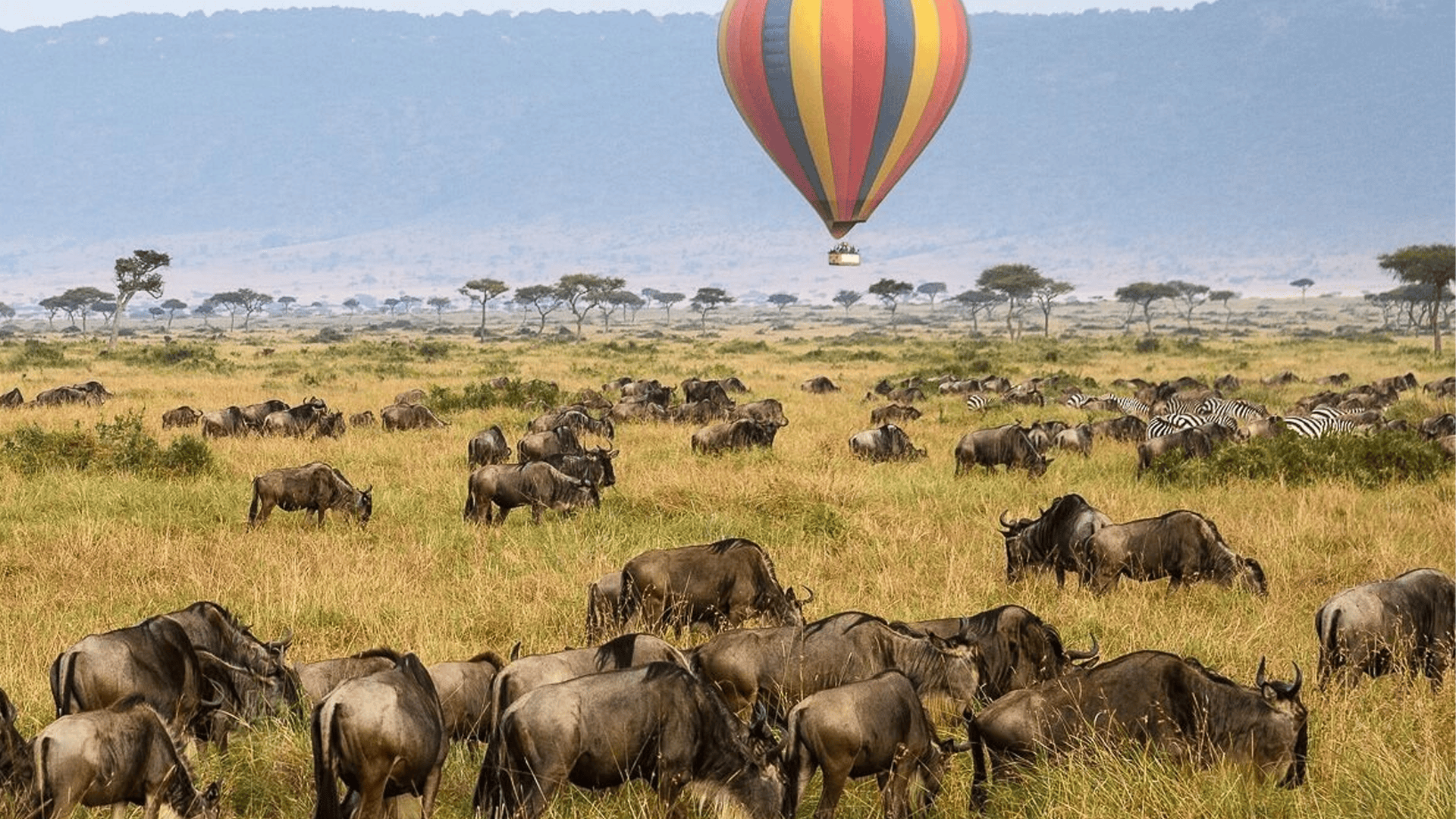
The heart of any South African safari on this route is the Kruger region: the vast national park itself and, more importantly for most visitors, the private reserves along its unfenced western boundary, including Sabi Sands, Timbavati, and Thornybush.
The private reserves are what make South Africa arguably the most reliable Big Five destination in Africa:
- Off-road driving is permitted, so vehicles can follow a leopard into the bush rather than watching from the road.
- Sightings are managed, with strict limits on vehicles per sighting.
- Guiding is exceptional, with a guide-and-tracker team on each vehicle.
- Leopard viewing in Sabi Sands is widely considered the best on the continent.
Three to four nights in a private reserve delivers the complete safari experience: morning and evening game drives, bush walks, and a strong probability of all five of the Big Five. A short flight connects Cape Town to the Kruger area (via Skukuza, Hoedspruit, or Nelspruit), making the transition seamless.
The best South African tours structure this leg to match your travel style: family-friendly lodges with kids’ programs, romantic camps for couples, or photography-focused properties with specialist vehicles.
When to go
South Africa’s safari sweet spot is the dry winter, May to September, when the bush thins out, game concentrates around water, and the Kruger region delivers its most reliable viewing. Cape Town runs on an opposite rhythm: its best weather is the southern summer, November to March, while winter brings rain.
The practical compromise: April to May and September to October give you good conditions at both ends of the route. If wildlife is your priority, favor the winter months and pack a jacket for Cape Town. For a fuller month-by-month breakdown, see our guidance on the best time to go on south african safari before locking dates.
Victoria Falls adds its own seasonal layer, covered below.
The Cape Town to Victoria Falls train
Now the romantic option, and one of the most searched elements of this route: the luxury train.
The classic journey is operated by Rovos Rail, and it’s a genuine bucket-list experience: a roughly seven-day journey from Cape Town to Victoria Falls aboard restored wood-paneled carriages, with formal dinners, an observation car, and en-suite suites. The route runs north through the Cape Winelands and the Great Karoo, stops at Matjiesfontein and the Big Hole diamond mine at Kimberley, pauses in Pretoria, then crosses into Zimbabwe at Beitbridge and traverses Hwange National Park, where a game drive is included. Animals can sometimes be spotted from the train itself, before arriving at Victoria Falls station.
A few honest notes for anyone considering the Cape Town to Victoria Falls train:
- It’s a journey, not a safari. The Hwange game drive is a highlight, but the train is primarily about the romance of rail travel, the scenery, and the service. Pair it with proper safari nights before or after.
- It’s a premium product. Pricing sits firmly in the luxury bracket, comparable per night to top safari lodges.
- Schedules are fixed. The train runs on set departure dates, so the rest of your itinerary gets built around it.
- Build in buffer days. Rail travel in Africa can run late; don’t book your international flight home for the day the train arrives.
For travelers short on time or budget, the alternative is simple: fly. Direct and one-stop flights link Cape Town and Johannesburg to Victoria Falls daily, turning a seven-day rail journey into a two-hour hop. Most South Africa and Victoria Falls tours use flights and put the saved days into extra safari nights. Neither choice is wrong; it depends whether the train itself is on your bucket list.
Victoria Falls: the finale
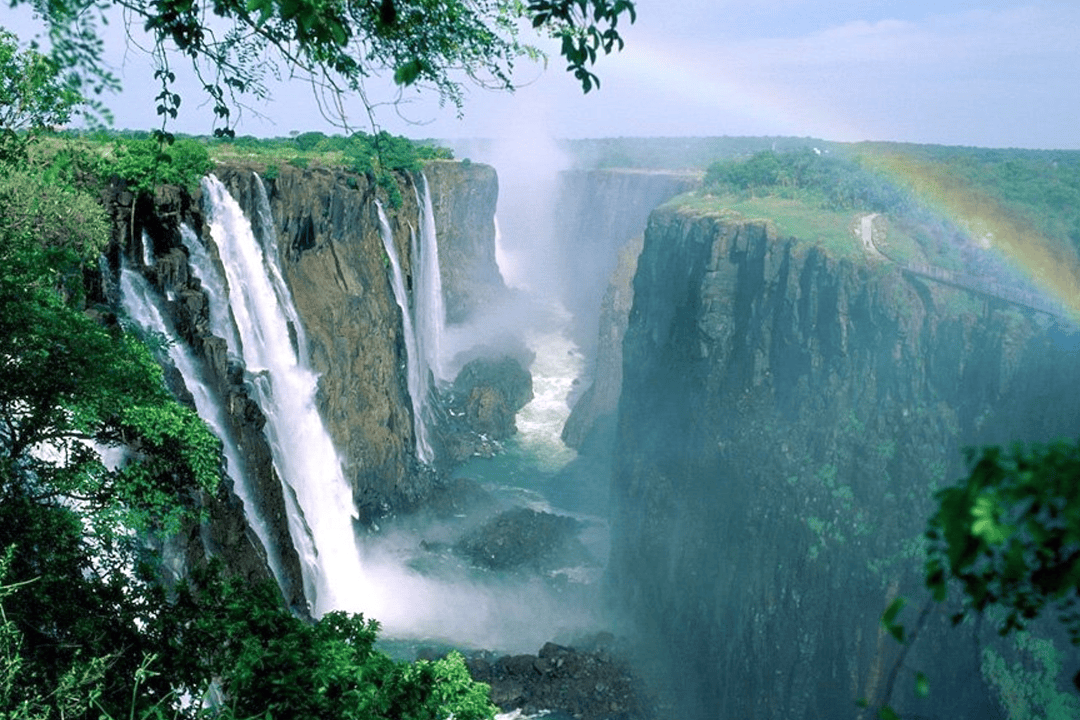
Victoria Falls earns its place as the closing act. The falls span nearly two kilometers, and in high-water season the spray column is visible from thirty kilometers away, the source of the local name Mosi-oa-Tunya, the smoke that thunders.
The seasonal character matters for planning:
- February to June (high water): the falls at maximum power, drenching spray, rainbows, the full spectacle. Views can actually be obscured by the sheer volume of mist at the peak.
- July to October (falling water): clearer views of the full curtain and gorge, and from around September the famous Devil’s Pool opens on the Zambian side, letting you swim to the literal edge.
Two nights is the standard stay, three if you want to add activities: sunset cruises on the Zambezi, whitewater rafting below the falls (best at low water), helicopter flights over the gorge, or a day trip to Chobe in Botswana, just over an hour away.
Putting the route together
A well-balanced Cape Town to Victoria Falls itinerary looks like this:
Days 1 to 4: Cape Town. Table Mountain, the Peninsula, the Winelands, and recovery from the long-haul flight.
Days 5 to 8: Kruger private reserve. Fly to the Lowveld for three or four nights of Big Five game drives. This is the wildlife core of the trip.
Days 9 to 11: Victoria Falls. Fly north for the finale: the falls, the Zambezi, and optional adventure activities.
That’s an eleven-day trip covering city, bush, and waterfall with only two internal flights. Swap the Kruger-to-Falls flight for the Rovos Rail journey, and it becomes a roughly two-week trip with the train as its centerpiece. Travelers with more time extend with Chobe and the Okavango Delta, turning the route into a full Southern African circuit.
Among the best safari tours South Africa offers, this route endures because it layers three completely different experiences in ascending drama, and every leg connects cleanly.
Ready to book?
The Cape Town to Victoria Falls route is one of those rare itineraries that works for almost everyone: honeymooners, families, first-time safari travelers, and returning Africa hands who somehow never did the classic. The decisions are just how long, which reserve, and whether the train is calling you.
When you’re ready, book your safari tour with us or reach out to build a custom version. We’ll balance the city, safari, and falls legs around your dates and budget, and we’ll tell you straight whether the train is worth it for your particular trip.